
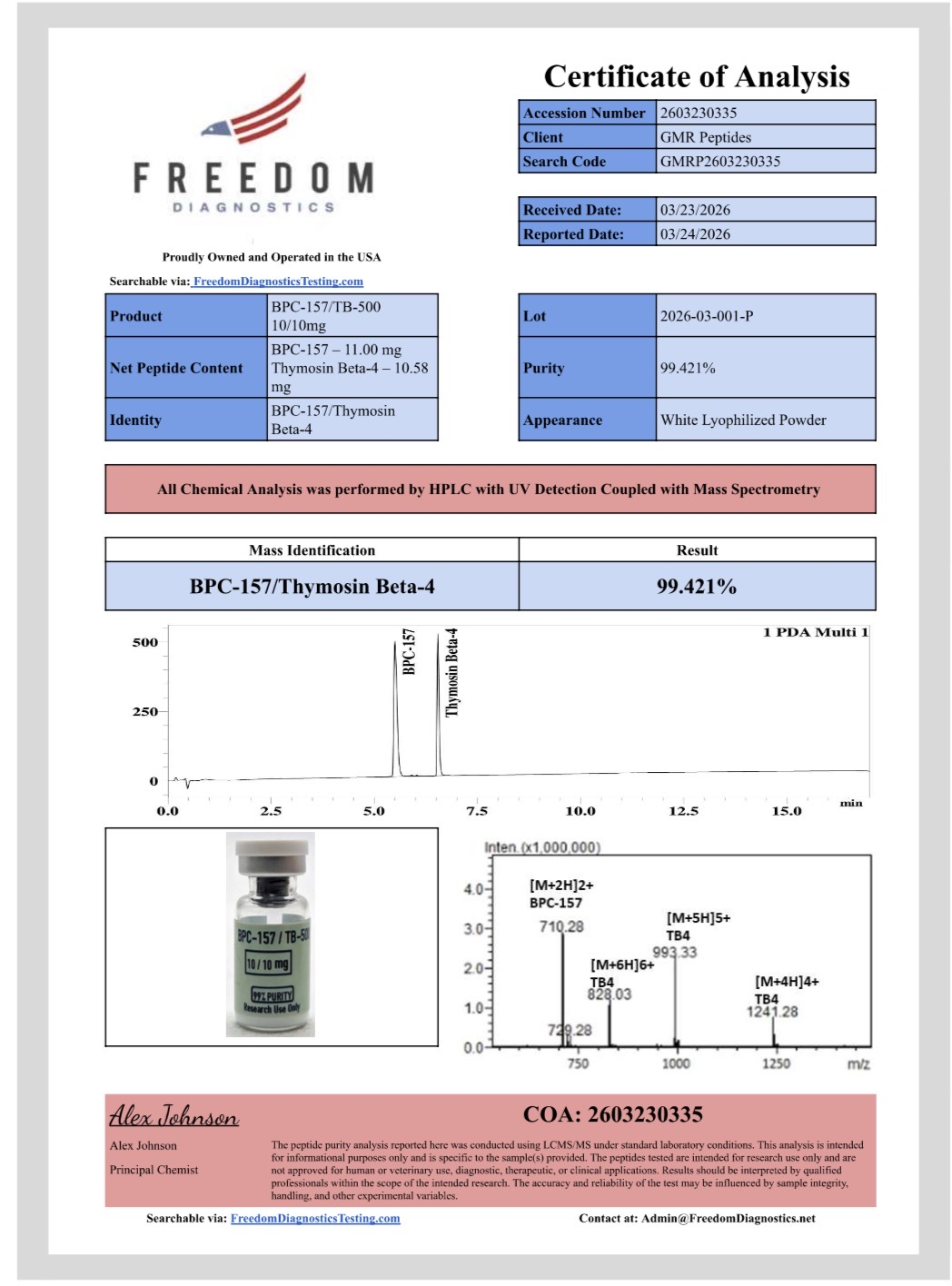
BPC-157 / TB-500 - 10mg / 10mg Vial
Lot #2026-03-001-P
PASS
0%
Verified Purity
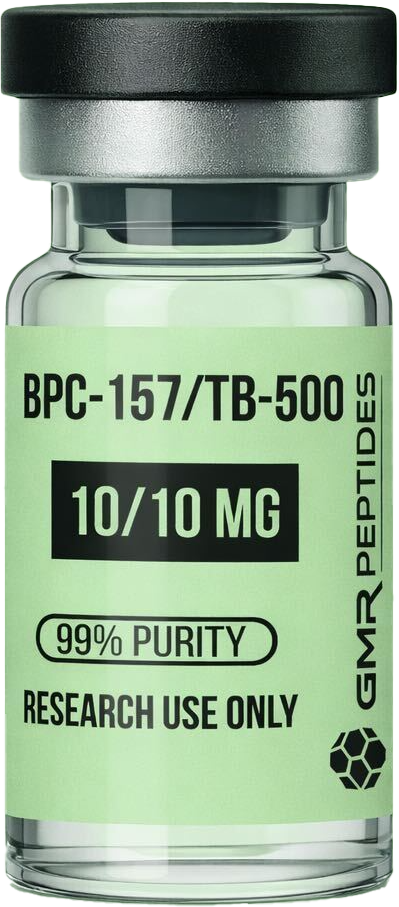
BPC-157 TB-500 stack is a dual peptide research stack designed for laboratory research. This dual peptide research stack includes Thymosin Beta-4 research peptide components and supports multi peptide signaling formulation studies.
35 in stock
. ships today if ordered before 3pm ET
Secure Checkout
On orders over $200
Money-back guarantee
🚚 Get 2 day shipping when you spend $250 or More
🚚 Free shipping over $200
🔄 60-day money back
🔒 SSL Secure
📦 Discreet packaging


Every batch verified by accredited US labs

Every order fully covered

No questions asked
Lot #2026-03-001-P
Verified Purity





Dual compound peptide formulations such as BPC-157 and Thymosin Beta-4 are commonly examined in laboratory environments to evaluate interaction behavior between cytoskeletal signaling peptides and extracellular matrix regulatory pathways across controlled experimental models.
Multi-compound peptide combinations are investigated in laboratory settings to evaluate coordinated signaling behavior, pathway overlap, and structural peptide interaction patterns across controlled experimental frameworks.
Vascular Endothelial Growth Factor Receptor 2
Monomeric Globular Actin Binding
Integrin-Linked Kinase Complex
Cellular Signaling Modulation Pathways
BPC-157 and TB-500 work through distinct but convergent pathways. BPC-157 involves VEGFR2-Akt-eNOS signaling, while TB-500 influences cellular migration through actin regulation. Both are studied for their role in signaling modulation across multiple experimental angles.
BPC-157 is observed to activate the VEGFR2 pathway, triggering the Akt-eNOS cascade. This process is studied for its impact on nitric oxide production and vascular signaling interaction across experimental frameworks.
Researchers study BPC-157 and Thymosin Beta-4 within structured experimental systems focused on peptide signaling activity, cellular migration pathways, actin binding dynamics, and extracellular matrix interaction behavior in multi peptide environments.
Selected findings from individual peptide experimental studies:
Data points reported in individual experimental models:
Marker observations compared to untreated experimental controls:
Multi compound peptide combinations are investigated in laboratory settings to evaluate coordinated signaling behavior, pathway overlap, and structural peptide interaction patterns across controlled experimental frameworks.
The combination targets multiple biological pathways: BPC-157 is associated with angiogenic signaling, while TB-500 influences cellular motility and cytoskeletal patterns within structured experimental models.
TB-500 has been studied in relation to ILK pathway activation, while BPC-157 is linked with vascular signaling pathways including VEGFR2.
BPC-157 stability profile is evaluated alongside TB-500 in controlled peptide interaction models.
Peptides studied in neurological models, including oligodendrocyte activity and brain-gut axis interaction.
This material is supplied exclusively for laboratory research use. It is not intended for diagnostic, therapeutic, veterinary, or human application. Handling should be performed by qualified professionals using appropriate experimental protocols.
Both peptides promote angiogenesis (blood vessel growth), which raises theoretical concerns about potential effects on tumor growth. This has not been definitively studied.
Technical specifications
Synthetic pentadecapeptide researched for angiogenesis and molecular signaling pathways.
Synthetic/endogenous peptide studied for cell migration, actin regulation, and cellular dynamics.
Dual-peptide research framework studied for complementary activity across vascular and cellular pathways.
This combination is investigated in laboratory settings to evaluate coordinated signaling behavior and pathway overlap. BPC-157 is studied for its interaction with molecular signaling pathways, while TB-500 is examined for its influence on cellular motility and cytoskeletal dynamics. Together, they provide a multi-pathway framework for observing structural peptide interaction patterns in controlled experimental models.
There are currently no published scientific studies examining the simultaneous administration of BPC-157 and TB-500 in a single research protocol. The theoretical research context for this combination is derived from individual peptide data and their respective molecular targets.
BPC-157 is primarily studied for its interaction with the VEGFR2-Akt-eNOS pathway to observe its influence on angiogenic signaling. In contrast, TB-500 is examined for its role in G-actin sequestration and its effects on cellular motility and cytoskeletal framework dynamics. Research models evaluate both peptides together to observe how vascular signaling and cellular migration pathways might interact or overlap within a controlled environment. Both compounds are also observed for their potential to modulate inflammatory signaling pathways.
Both peptides have been evaluated individually in various preclinical and research models. BPC-157 has shown a favorable profile in animal models with no established lethal dose ($LD_{50}$) or observed organ toxicity in available data. Similarly, TB-500 (Thymosin Beta-4) has been documented in initial research settings without serious adverse event reports.
In laboratory environments, BPC-157 and TB-500 are utilized in various in-vitro and preclinical models. BPC-157 is frequently noted in research for its stability within gastric-like environments for extended periods, making it a subject of interest in specialized gastric stability studies. TB-500 is typically examined through systemic research protocols to observe its role in cellular motility. There are no established research protocols for the combined administration of these peptides, and laboratory methodologies are typically derived from independent compound studies.
Due to the absence of regulatory oversight for research-only compounds, parameters such as purity, potency, and sterility can vary significantly across different laboratory suppliers. It is standard research practice to evaluate Certificates of Analysis (COAs) and source materials from facilities that utilize third-party analytical testing. Maintaining strict quality control is essential in laboratory settings to prevent cross-contamination or inaccurate concentrations that could compromise experimental data integrity.
The lack of regulatory oversight for these compounds means purity, potency, sterility, and batch-to-batch consistency may vary significantly between suppliers. Certificates of analysis (COAs) should be evaluated, and products from reputable sources with third-party testing are recommended. Contamination with other substances or inaccurate dosing are real concerns with non-pharmaceutical grade products.
No. These products are supplied strictly for laboratory research use only. They are not approved for human or veterinary use and are not intended for diagnostic or therapeutic applications.
This product is sold exclusively for in vitro research and educational purposes. It is not intended for human or veterinary use, and is not intended to diagnose, treat, cure, or prevent any medical condition or disease. All clinical trial data, research findings, and scientific information presented on this page are sourced from peer-reviewed academic publications. This content is provided for educational reference only and does not constitute medical advice, product claims, or treatment recommendations. By purchasing this product, the buyer confirms they are a qualified researcher and will use it strictly in accordance with all applicable federal, state, and local laws and regulations. GMR Peptides assumes no liability for any misuse of this product outside of a research context.
This website contains products for research use only. By entering, you confirm that you are 21 years of age or older.
Enter your email to unlock 20% off your first research supply order.
By clicking "I Agree", you acknowledge that all products are strictly for laboratory research purposes and are not for human consumption.