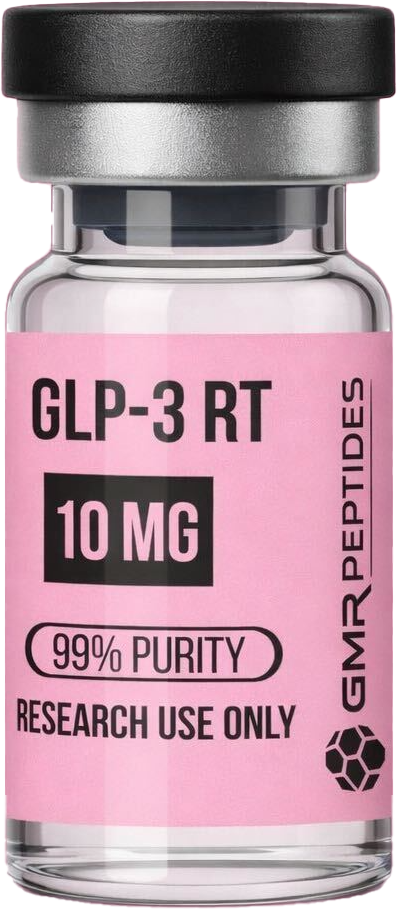
GLP-3 (RT) - 20mg Vial
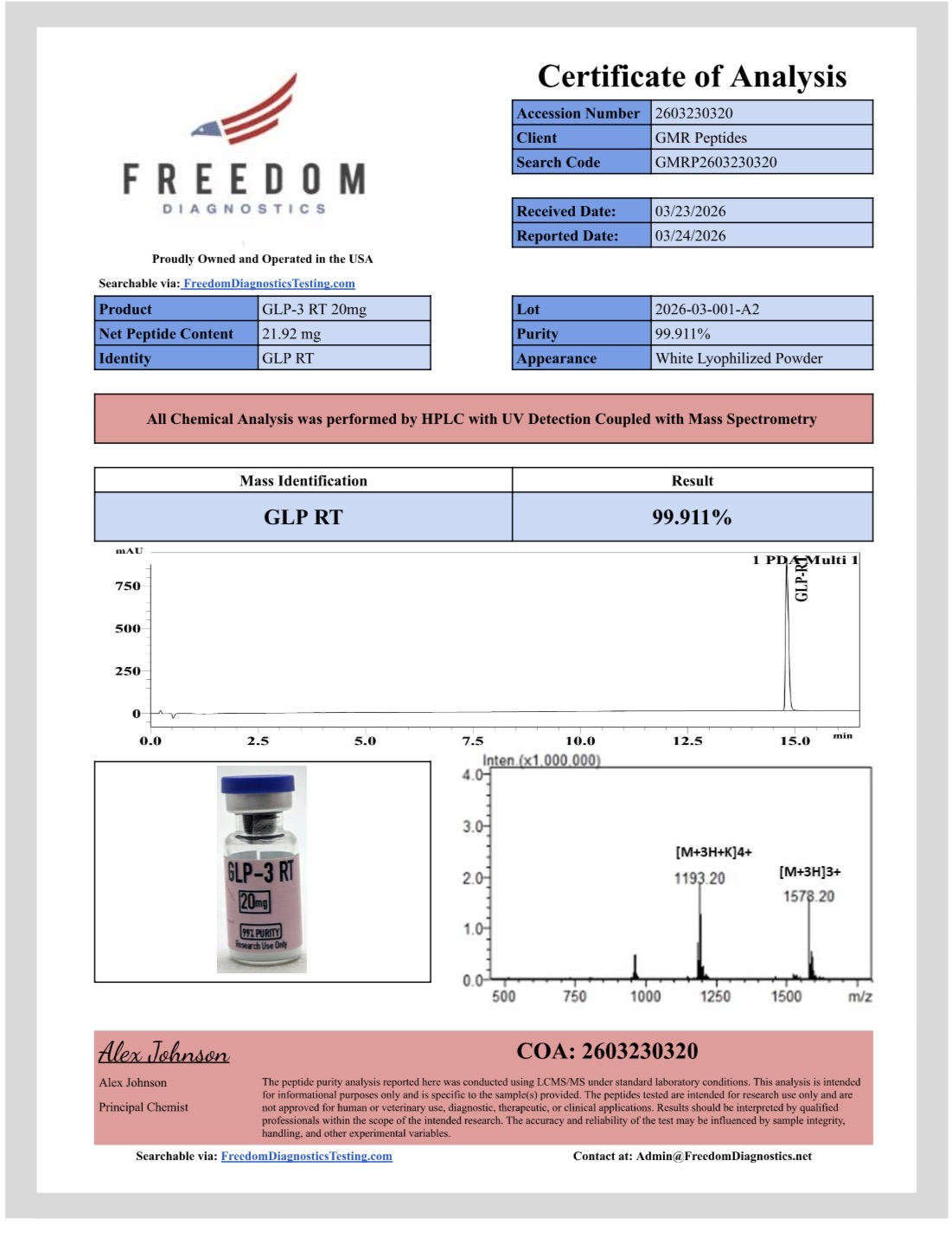
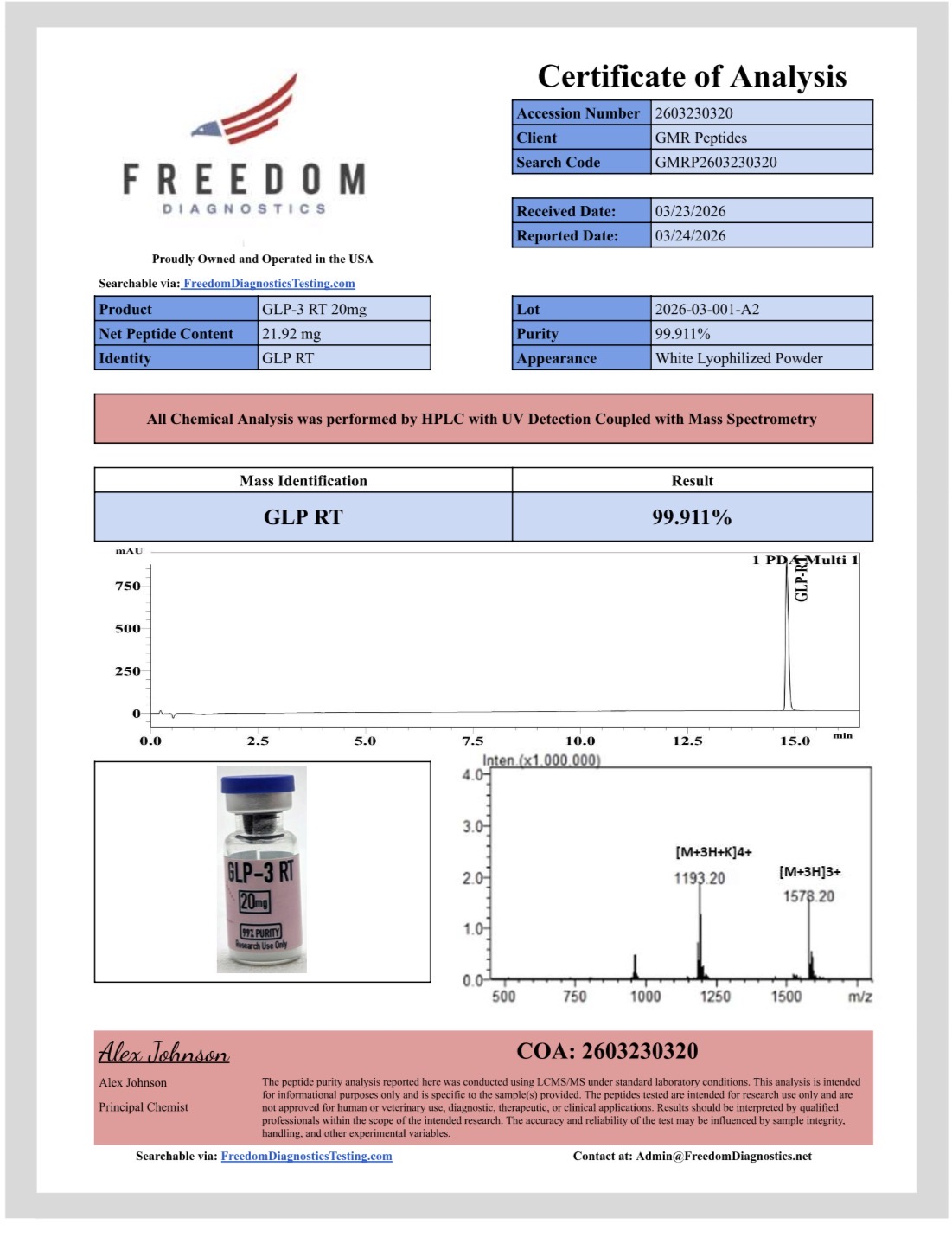
Lot #2026-03-001-A2
Verified Purity
GLP-3 RT research peptide supplied in high purity for advanced laboratory research and analytical investigation. This compound is studied alongside retatrutide research peptide as a triple agonist research peptide targeting GLP-1 GIP glucagon receptor peptide pathways, offered by a trusted research peptide supplier USA.


90 in stock
. ships today if ordered before 3pm ET
Secure Checkout
On orders over $200
Money-back guarantee
๐ Get 2 day shipping when you spend $250 or More
๐ Free shipping over $200
๐ 60-day money back
๐ SSL Secure
๐ฆ Discreet packaging
GLP-3 RT research peptide supplied in high purity for advanced laboratory research and analytical investigation. This compound is studied alongside retatrutide research peptide as a triple agonist research peptide targeting GLP-1 GIP glucagon receptor peptide pathways, offered by a trusted research peptide supplier USA.


๐ Get 2 day shipping when you spend $250 or More
๐ Free shipping over $200
๐ 60-day money back
๐ SSL Secure
๐ฆ Discreet packaging

Every batch verified by accredited US labs

Every order fully covered

No questions asked
Each batch is independently verified using HPLC and mass spectrometry to confirm identity, purity,
and structural consistency.
Lot #2026-03-001-A2
Verified Purity
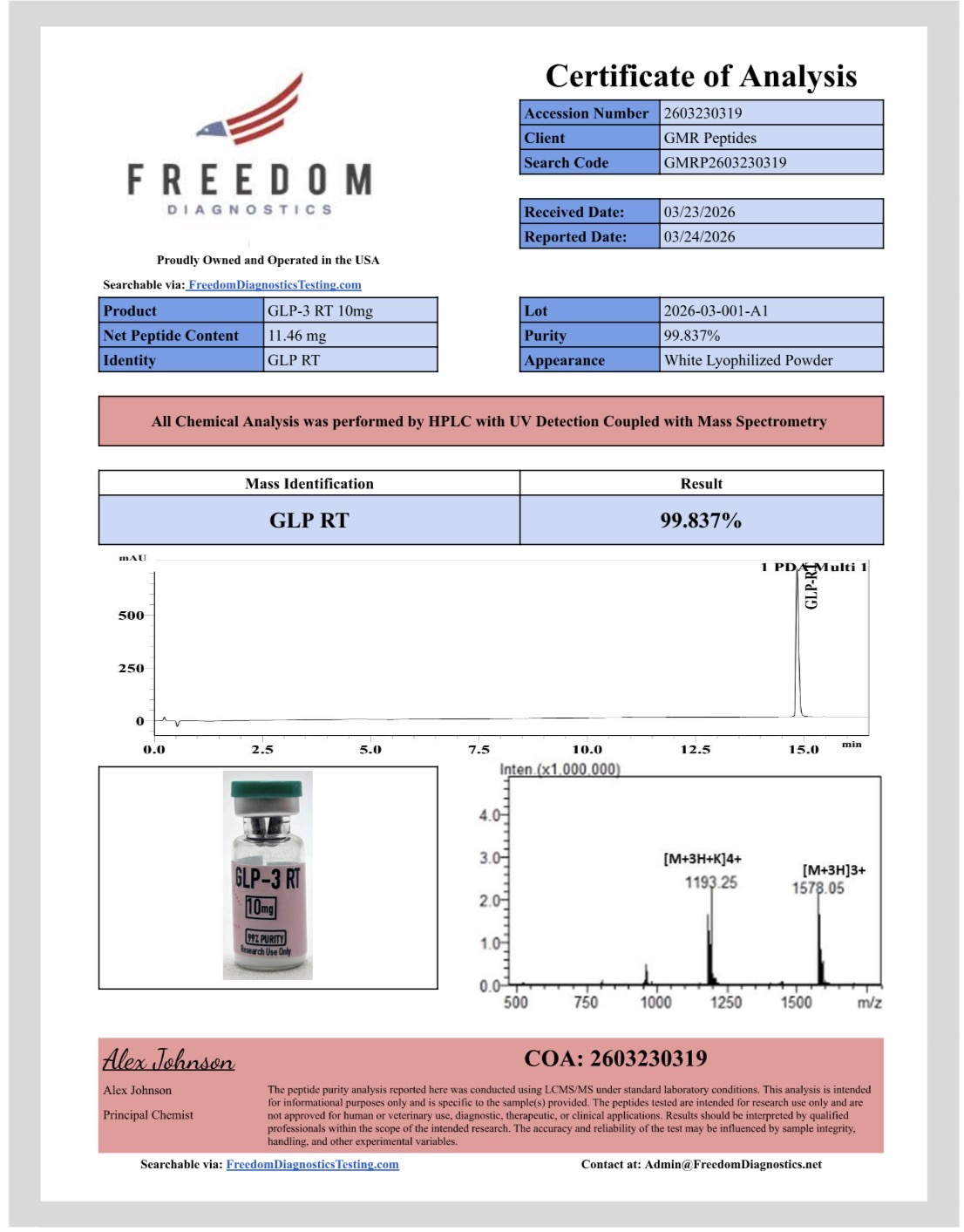
Lot #2026-03-001-A1
Verified Purity
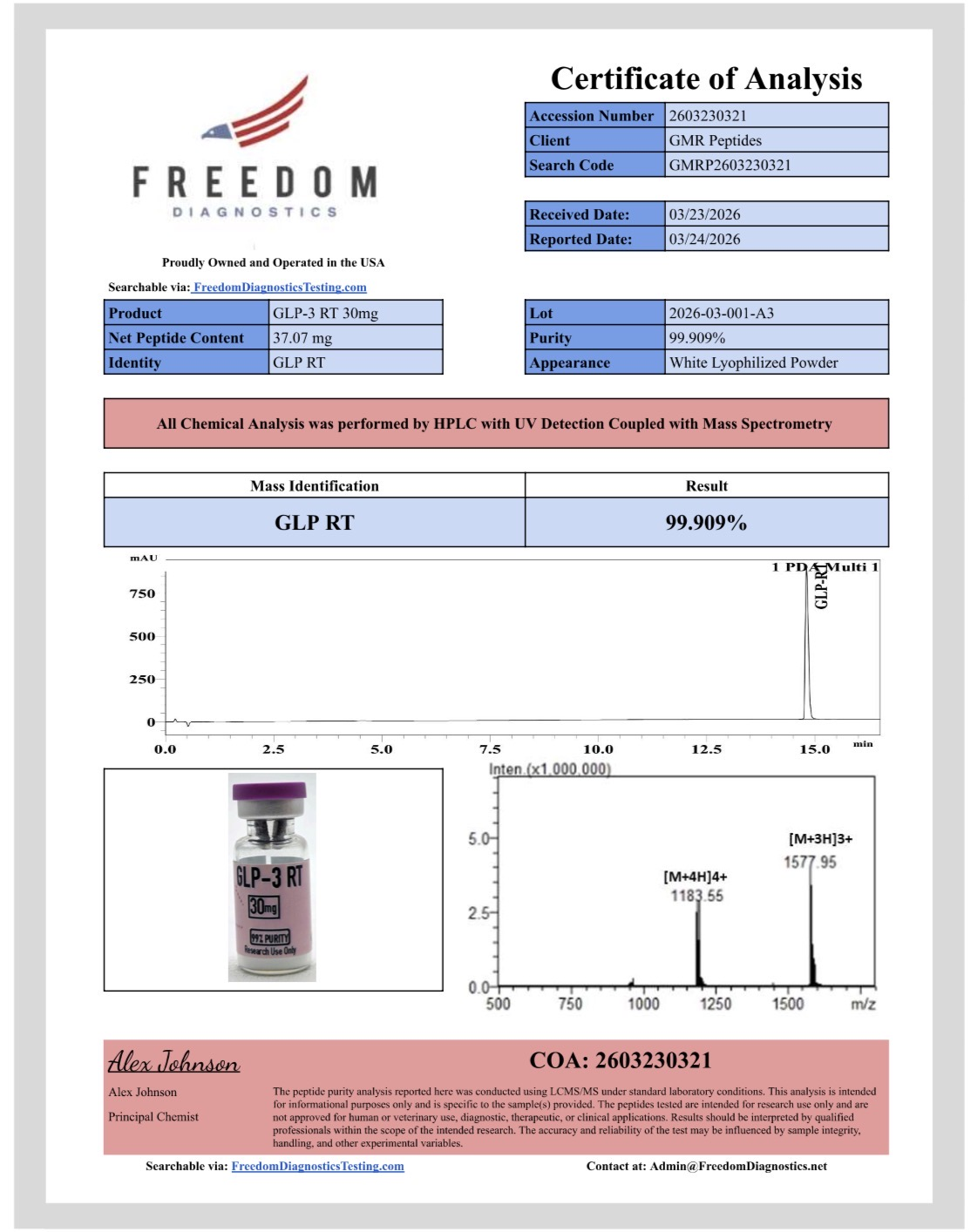
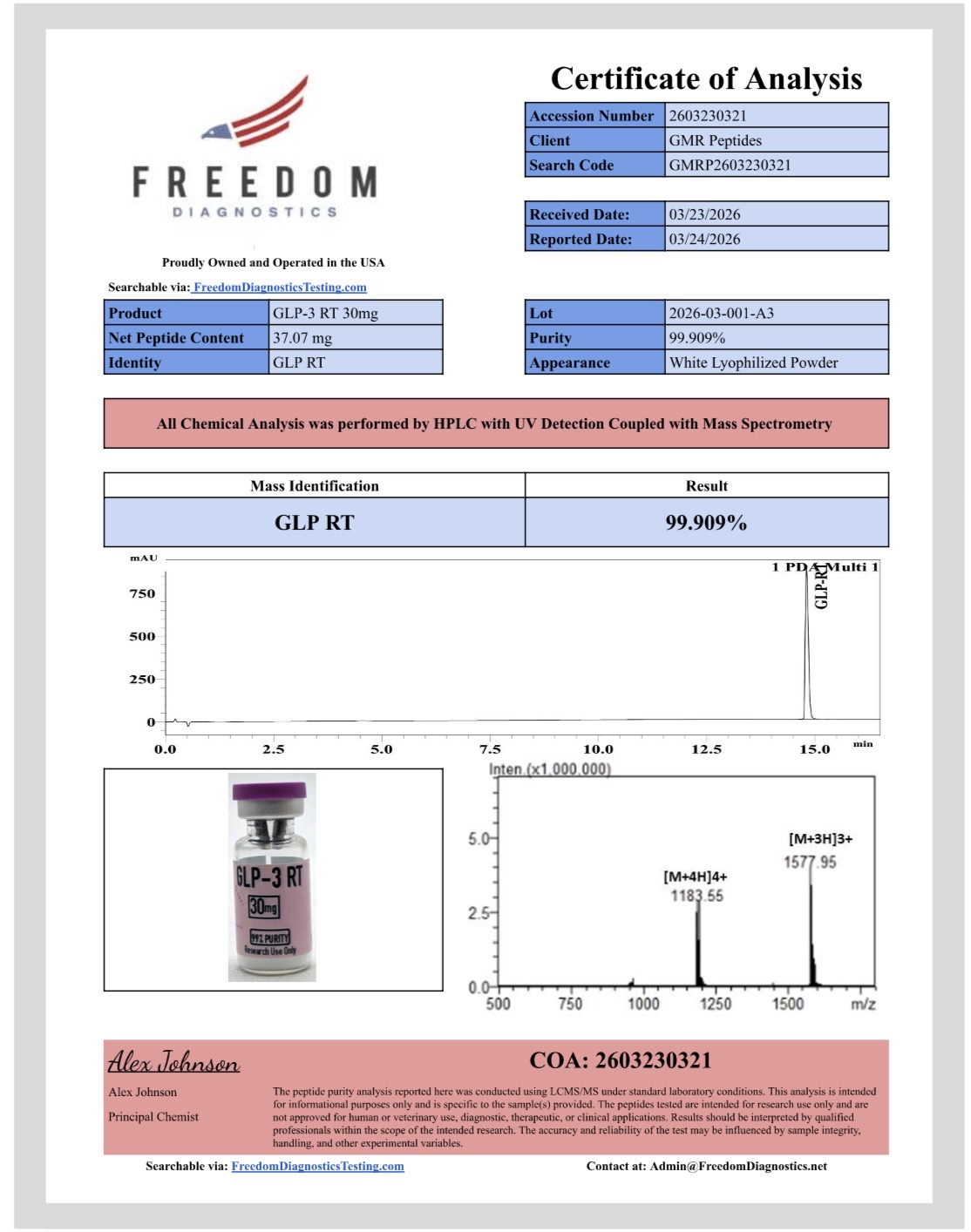
Lot #2026-03-001-A3
Verified Purity
Because GLP-3 RT interacts with multiple receptor systems, researchers study this peptide within broader signaling models designed to evaluate cross pathway coordination and receptor level response mechanisms.
Research focus is centered on how the integration of three distinct pathways influences the overall molecular signaling profile in controlled laboratory environments.
Glucose-dependent Insulinotropic Polypeptide
Glucagon-like Peptide-1
Glucagon signaling pathway
The glucagon receptor interaction is a primary area of focus. Activation of this receptor adds a distinct signaling pathway that researchers evaluate to understand broader molecular engagement.
Within incretin class peptide research, GLP-3 RT is frequently examined alongside GLP-1 and dual agonist compounds to evaluate differences in receptor engagement behavior and signaling breadth across experimental models.
GLP-3 RT is a multi receptor research peptide studied in controlled laboratory environments for its interaction with GLP-1, GIP, and glucagon receptor signaling pathways. Researchers investigate these interactions to better understand peptide stability, receptor binding behavior, and signaling mechanisms at the molecular level.
GLP-3 RT is a multi receptor research peptide studied in controlled laboratory environments for its interaction with GLP-1, GIP, and glucagon receptor signaling pathways.
GLP-3 RT is commonly examined in controlled research settings focused on receptor activation models, peptide signaling pathways, and multi agonist interaction frameworks.
GLP-3 RT is commonly examined in controlled research settings focused on receptor activation models, peptide signaling pathways, and multi agonist interaction frameworks. Studies typically evaluate molecular stability, pathway engagement, and comparative incretin class peptide behavior.
Because GLP-3 RT interacts with multiple receptor systems, researchers study this peptide within broader signaling models designed to evaluate cross pathway coordination and receptor level response mechanisms.
GLP-3 RT is supplied exclusively for laboratory research use. Handling should be performed by qualified professionals using controlled experimental protocols and appropriate analytical environments.
GLP-3 RT is supplied exclusively for analytical and laboratory research purposes. This compound is not intended for diagnostic or therapeutic use in humans or animals.
Within incretin class peptide research, GLP-3 RT is frequently examined alongside GLP-1 and dual agonist compounds to evaluate differences in receptor engagement behavior and signaling breadth across experimental models
High-purity synthetic peptide developed for multi-receptor analytical research.
Strict environmental controls are required to maintain peptide structural integrity.
GLP-3 RT is currently an investigational compound limited to laboratory research settings.
All clinical data and research findings cited on this page are sourced from peer-
reviewed journals and official publications.
Retatrutide is a triple-action agonist that targets three receptors (GIP, GLP-1, and Glucagon), while GLP-1 targets only GLP-1 and GLP-2 targets GLP-1 and GIP. The addition of the glucagon receptor may explain the enhanced weight loss (28.7% vs 17% for sema******, 22.5% for tirzepatide) and the remarkable 86% liver fat reduction observed in trials.
Retatrutide is currently in Phase 3 clinical trials (TRIUMPH program). Based on the trial timeline, Phase 3 results are expected in 2026, with potential FDA approval around 2027. This timeline is speculative and subject to change based on regulatory processes.
No tolerance was observed in trials. Participants continued losing weight throughout 48-68 week studies without needing dose increases. Weight loss curves showed continued progress, not plateaus from desensitization. Weight tends to slow after ~24 weeks but this reflects reaching a new equilibrium, not drug tolerance.
Like other GLP-1 medications, weight regain is expected if treatment is discontinued. The TRIUMPH program is testing a 4mg maintenance dose for long-term use. The longest data available is 68 weeks (Phase 3) and 48 weeks (Phase 2).
Gastrointestinal side effects were most common: nausea (43%), diarrhea (33%), constipation (25%), and vomiting (21%) at the 12mg dose. These typically decreased over time. Unique to Retatrutide is dysesthesia (unusual skin sensations) in about 21% at the highest dose โ this is likely related to glucagon receptor activity and was generally mild.
Lyophilized (powder): -20ยฐC for 24+ months. Reconstituted: 2-8ยฐC for ~30 days. Avoid freeze/thaw cycles and protect from light. Keep refrigerated after reconstitution.
No. All products are supplied strictly for laboratory research use only. They are not approved for
human or veterinary use and are not intended for diagnostic or therapeutic purposes.
This product is sold exclusively for in vitro research and educational purposes. It is not intended for human or veterinary use, and is not intended to diagnose, treat, cure, or prevent any medical condition or disease. All clinical trial data, research findings, and scientific information presented on this page are sourced from peer-reviewed academic publications. This content is provided for educational reference only and does not constitute medical advice, product claims, or treatment recommendations. By purchasing this product, the buyer confirms they are a qualified researcher and will use it strictly in accordance with all applicable federal, state, and local laws and regulations. GMR Peptides assumes no liability for any misuse of this product outside of a research context.
This website contains products for research use only. By entering, you confirm that you are 21 years of age or older.
Enter your email to unlock 20% off your first research supply order.
By clicking "I Agree", you acknowledge that all products are strictly for laboratory research purposes and are not for human consumption.