
TB-500 - 10mg Vial
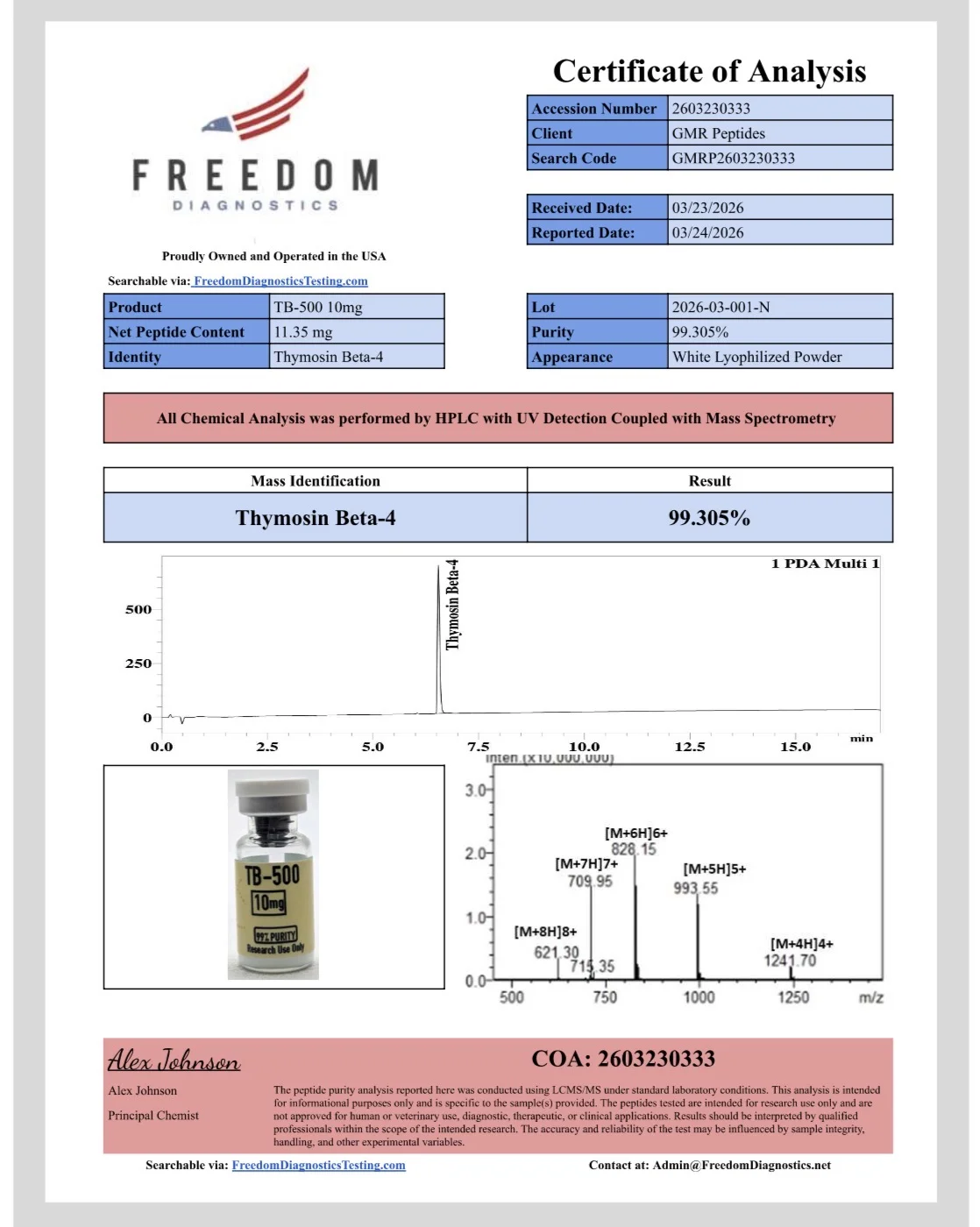
Lot #2026-03-001-N
PASS
0%
Verified Purity
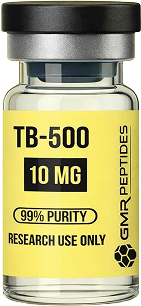
TB-500 is a synthetic thymosin beta-4 fragment used in laboratory peptide signaling studies focused on cell migration behavior, actin-associated pathway activity, and tissue-response modeling. As a TB-500 research peptide supplier, GMR Peptides positions this compound for controlled research use, peptide purity verification, and receptor pathway research peptide workflows. This synthetic peptide fragment is offered for experimental evaluation only and is not presented for therapeutic, diagnostic, or consumer use.


20 in stock
. ships today if ordered before 3pm ET
Secure Checkout
On orders over $200
Money-back guarantee
🚚 Get 2 day shipping when you spend $250 or More
🚚 Free shipping over $200
🔄 60-day money back
🔒 SSL Secure
📦 Discreet packaging

TB-500 is a synthetic thymosin beta-4 fragment used in laboratory peptide signaling studies focused on cell migration behavior, actin-associated pathway activity, and tissue-response modeling. As a TB-500 research peptide supplier, GMR Peptides positions this compound for controlled research use, peptide purity verification, and receptor pathway research peptide workflows. This synthetic peptide fragment is offered for experimental evaluation only and is not presented for therapeutic, diagnostic, or consumer use.
🚚 Get 2 day shipping when you spend $250 or More
🚚 Free shipping over $200
🔄 60-day money back
🔒 SSL Secure
📦 Discreet packaging

Every batch verified by accredited US labs

Every order fully covered

No questions asked
Third-party analytical review supports batch documentation for TB-500 receptor pathway research peptide evaluation, including identity confirmation, peptide purity verification, and laboratory reference use.
Lot #2026-03-001-N
Verified Purity


Third-Party Independent Verification — All GMR Peptides products are tested by accredited external laboratories using HPLC and Mass Spectrometry. We never self-certify. Results are published on every product page with no exceptions.


TB-500 is commonly discussed as a synthetic thymosin beta-4 fragment research peptide evaluated in laboratory settings for its interaction with actin-associated cellular processes, peptide signaling dynamics, and migration-related pathway behavior.
Cytoskeletal Organization Behavior
Intracellular Signaling Modulation
Synthetic Fragment Evaluation
TB-500 has been explored in preclinical systems for peptide signaling dynamics associated with directional cell movement, epithelial response observation, and matrix-related signaling behavior.
Experimental observations involve NF-κB-associated signaling, cytokine-related response markers, and pathway signaling behavior in controlled laboratory models. This analysis avoids therapeutic implications.
Experimental model findings and receptor pathway research peptide review
Evaluation of epithelial closure timing and dose-dependent signaling patterns as reported in established research-grade analytical studies.
Findings across investigational dose ranges are presented as laboratory observation markers rather than therapeutic claims.
Comparison summary of reported model findings and laboratory outcome markers relative to control benchmarks.
This TB-500 research peptide analysis positions the compound for scientific investigation into pathway signaling behavior, actin-related peptide activity, and experimental tissue-response modeling.
Directional cell movement and cytoskeletal organization signaling behavior in laboratory models.
↗ Experimental Model ReviewExploratory peptide signaling studies involving ILK activity and cardiovascular response patterns.
↗ Cardiovascular ContextFunctional observation markers and experimental timing data in preclinical neurologic models.
↗ Investigative LiteratureOcular surface laboratory model evaluation and epithelial response observation in research.
↗ Ophthalmic SettingsExploratory laboratory studies have referenced integrin-linked kinase (ILK) activity and cell motility markers in cardiovascular research models.
Focus on functional observation markers in preclinical neurological models and oligodendrocyte-related pathway signaling behavior.
Framed as ocular surface laboratory model evaluation and investigational pathway signaling behavior.
Comparative mechanism review across distinct research peptides may note overlapping interest in signaling behavior.
Available reporting should be interpreted through observed event frequency in limited datasets, handling considerations, and research context notes.
Available reporting on TB-500 includes limited investigational observations. For compliant implementation, event reporting should be treated as dataset-specific and non-conclusive.
TB-500 is commonly described as a synthetic thymosin beta-4 fragment research peptide studied for pathway signaling behavior connected to actin regulation and peptide movement dynamics. This technical section supports laboratory peptide signaling studies by summarizing sequence length, peptide class, storage conditions, and investigational context.
TB-500 is a synthetic thymosin beta-4 fragment research peptide studied for actin regulation and peptide movement dynamics in laboratory signaling studies.
Proper handling ensures molecule profile integrity and purity verification within controlled laboratory settings.
This compound is presented as a research peptide within investigational documentation for pathway signaling studies.
All clinical data and research findings cited on this page are sourced from peer-
reviewed journals and official publications.
TB-500 is a synthetic peptide sequence commonly discussed as a thymosin beta-4 fragment research
peptide. In research-supply positioning, it is described as a laboratory compound used for experimental
review of peptide signaling dynamics, actin-related pathway behavior, and model-based tissue-response
observation.
TB-500 should not be presented as an FDA-approved product for general consumer or medical use. The
page should state that it is supplied strictly for research purposes and that current discussion relates to
laboratory model evaluation and investigational literature review.
Published references describe experimental observations involving cell migration behavior, epithelial
response markers, and pathway signaling activity in preclinical systems. This information should be framed
as laboratory peptide signaling studies rather than treatment evidence or guaranteed biological effect.
For compliant page copy, avoid procedural use instructions. Replace them with a neutral statement noting
that experimental design, formulation, and handling protocols vary by research setting and should only be
determined within qualified laboratory frameworks.
The page should explain that long-term safety characterization is not established and that available
reporting is limited to investigational or preclinical contexts. Present any tolerability references as non
conclusive observations, not assurances of safety.
A compliant comparison should focus on differing research interest areas and signaling frameworks.
TB-500 is commonly discussed in relation to actin-associated movement dynamics, while other
compounds may be discussed in different pathway contexts. Avoid comparative claims about healing,
recovery, or superiority.
This product is sold exclusively for in vitro research and educational purposes. It is not intended for human or veterinary use, and is not intended to diagnose, treat, cure, or prevent any medical condition or disease. All clinical trial data, research findings, and scientific information presented on this page are sourced from peer-reviewed academic publications. This content is provided for educational reference only and does not constitute medical advice, product claims, or treatment recommendations. By purchasing this product, the buyer confirms they are a qualified researcher and will use it strictly in accordance with all applicable federal, state, and local laws and regulations. GMR Peptides assumes no liability for any misuse of this product outside of a research context.
This website contains products for research use only. By entering, you confirm that you are 21 years of age or older.
Enter your email to unlock 20% off your first research supply order.
By clicking "I Agree", you acknowledge that all products are strictly for laboratory research purposes and are not for human consumption.