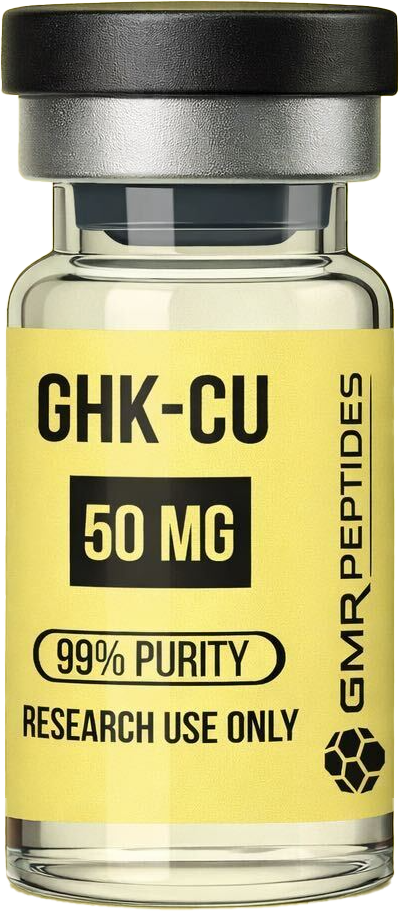
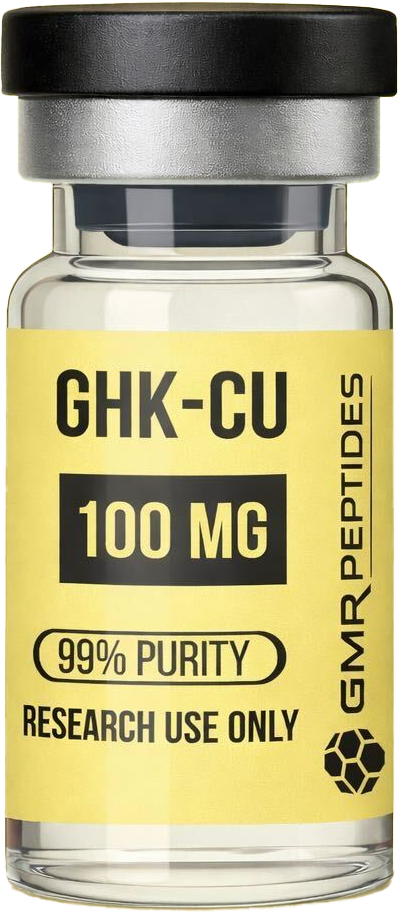
GHK-Cu - 50mg Vial
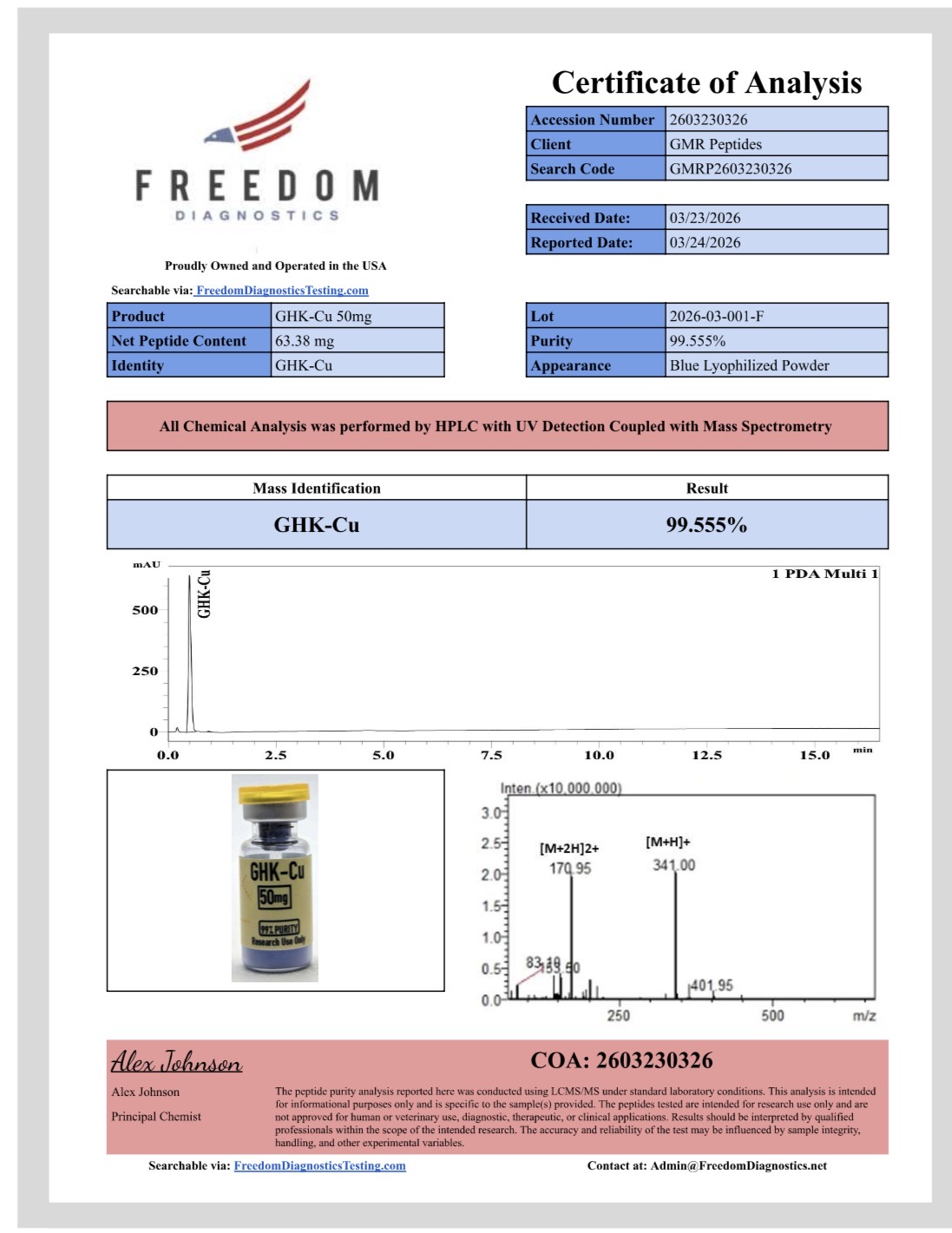
Lot #2026-03-001-F
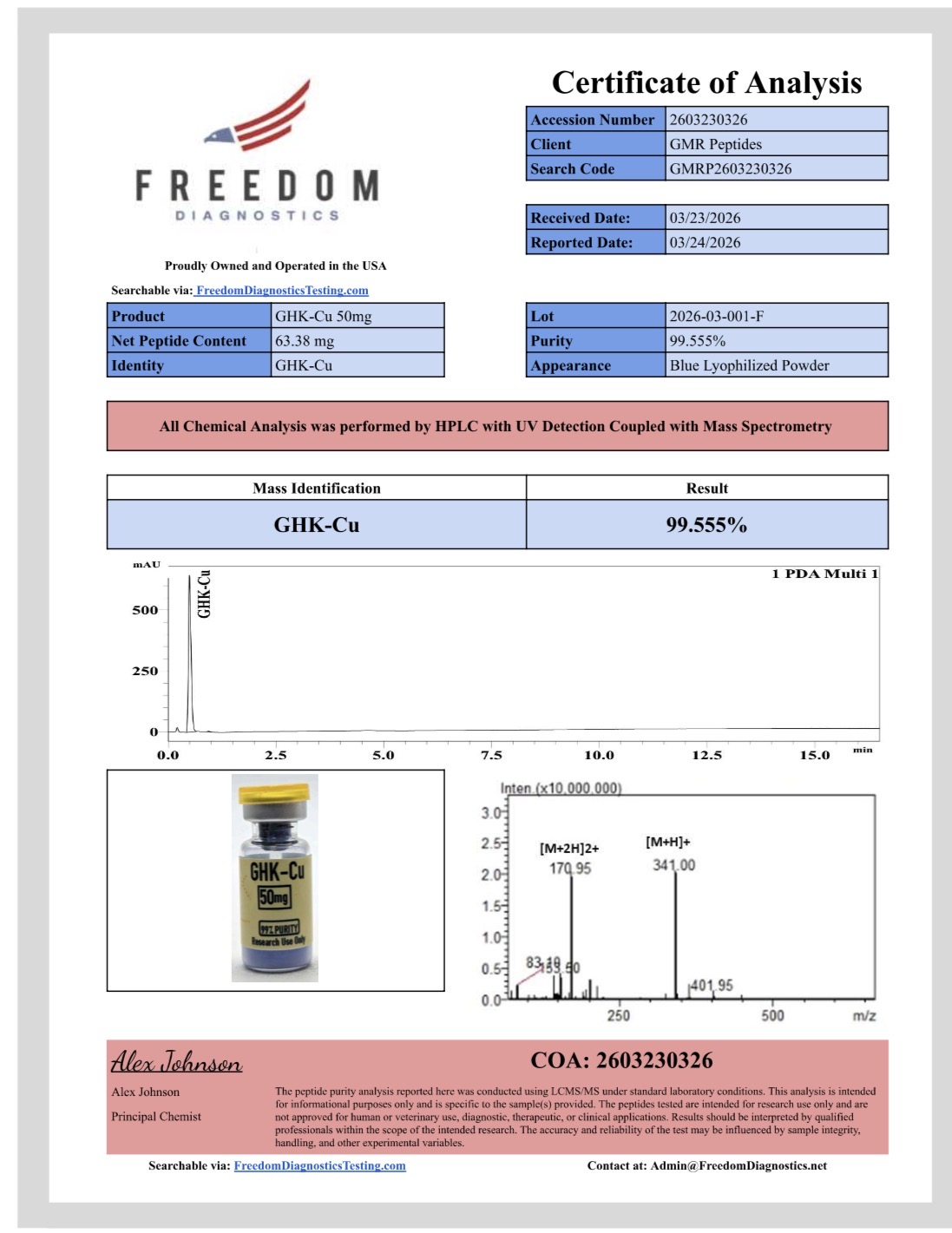
Verified Purity
GHK-Cu research peptide is a copper-binding tripeptide supplied as a lyophilized research compound for laboratory investigations involving peptide signaling, copper transport mechanisms, and extracellular matrix research models.


110 in stock
. ships today if ordered before 3pm ET
Secure Checkout
On orders over $200
Money-back guarantee
🚚 Get 2 day shipping when you spend $250 or More
🚚 Free shipping over $200
🔄 60-day money back
🔒 SSL Secure
📦 Discreet packaging
GHK-Cu research peptide is a copper-binding tripeptide supplied as a lyophilized research compound for laboratory investigations involving peptide signaling, copper transport mechanisms, and extracellular matrix research models.


🚚 Get 2 day shipping when you spend $250 or More
🚚 Free shipping over $200
🔄 60-day money back
🔒 SSL Secure
📦 Discreet packaging

Every batch verified by accredited US labs

Every order fully covered

No questions asked
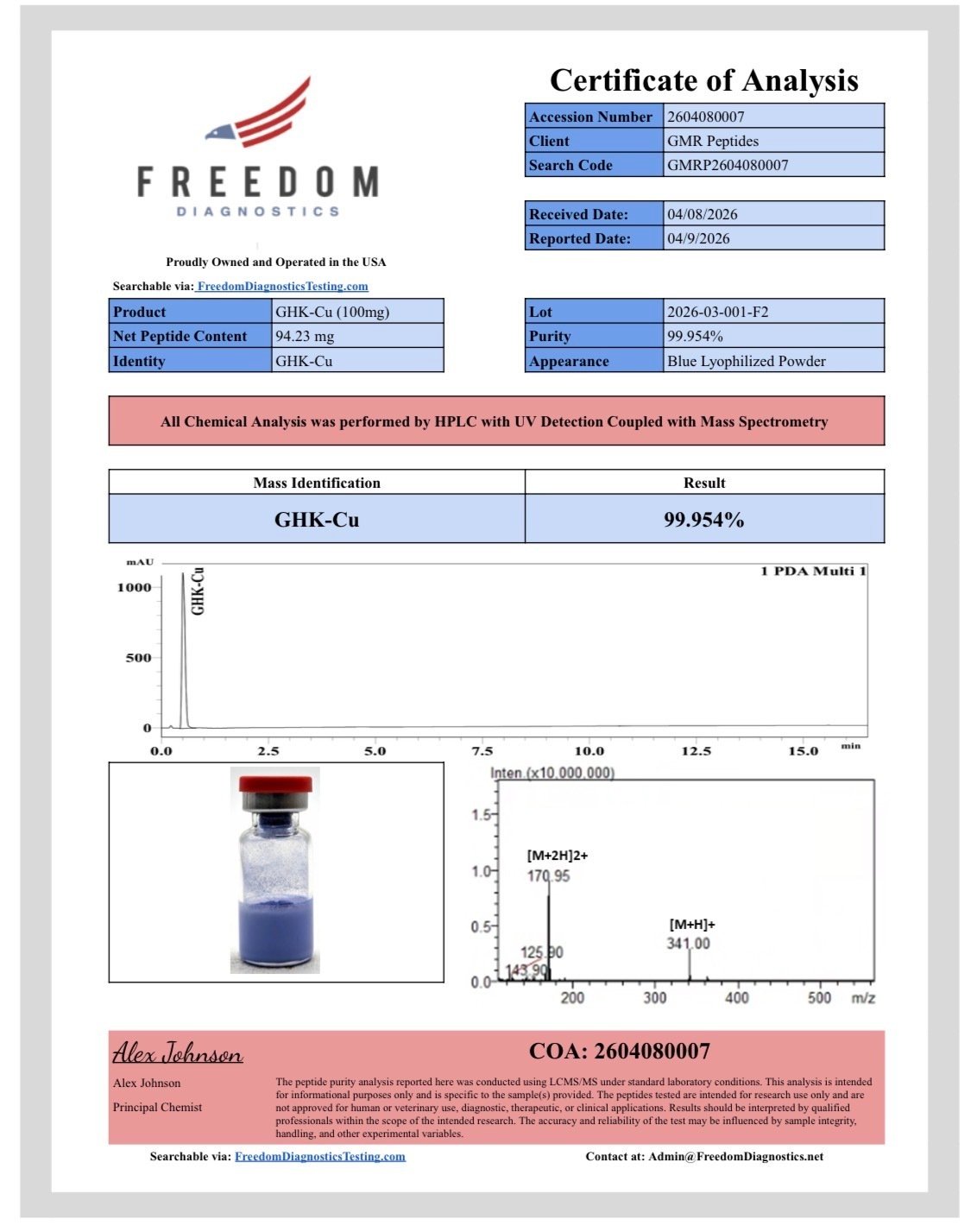
Each production lot is independently verified using HPLC and mass spectrometry to confirm
identity, purity, and structural consistency
Lot #2026-03-001-F
Verified Purity
Lot #2026-03-001-F2
Verified Purity
Third-Party Independent Verification — All GMR Peptides products are tested by accredited external laboratories using HPLC and Mass Spectrometry. We never self-certify. Results are published on every product page with no exceptions.
GHK-Cu is a naturally occurring copper-binding tripeptide studied in laboratory environments for its interaction with extracellular matrix signaling pathways, copper transport activity, and peptide-mediated gene expression models.
Extracellular Matrix Signaling
Evaluated in laboratory environments for interactions with signaling pathways and peptide-mediated gene expression models.
Peptide Signaling Context
Frequently evaluated in experimental models designed to examine cellular communication and structural protein regulation mechanisms.
Cellular Mineral Transport
The copper-binding component delivers bioavailable copper to research systems, activating internal enzymatic antioxidant models.
No other studied peptide approaches GHK-Cu’s ability to modulate the human genome. Research demonstrates influence over 31.2% of all human genes — affecting pathways from DNA repair and antioxidant defense to stem cell activation and anti-inflammatory response.
Genes Upregulated
Genes Downregulated
Within copper-binding peptide research, GHK-Cu is frequently evaluated alongside related
signaling peptides to investigate structural stability, copper coordination behavior, and extracellular
matrix interaction patterns under controlled experimental conditions
Controlled studies report measurable improvements in hair follicle size, growth rate, and active growth phase duration.
Multiple repair mechanisms activate simultaneously — making GHK-Cu one of the more comprehensively studied wound-healing compounds.
GHK-Cu functions as a cellular reprogrammer — shifting gene expression away from destructive aging patterns toward regenerative activity.
Activates the body's internal antioxidant machinery — particularly the SOD enzyme system responsible for neutralizing free radicals.
Researchers commonly examine GHK-Cu in controlled experimental systems involving peptide
signaling pathways, copper ion transport behavior, extracellular matrix organization models, and
gene expression regulation frameworks.
Laboratory models evaluate GHK-Cu in experimental systems involving cellular communication mechanisms.
Analysis of peptide-mediated gene expression regulation frameworks[cite: 22, 27].
This material is supplied exclusively for laboratory research use. Handling should be performed by
qualified professionals using appropriate experimental procedures and analytical documentation
review prior to use.
Strict Compliance Notice: All products are supplied strictly for laboratory research use only. They are not approved for human or veterinary use and are not intended for diagnostic or therapeutic applications. Handling should be performed by qualified professionals using appropriate experimental procedures.
Full molecular and technical reference data for GHK-Cu.
This material is supplied exclusively for laboratory research use by qualified professionals.
Analytical consistency for 24 months
Maintain structural integrity for 30 days
Complete observation within 24 hours
GHK-Cu is a naturally occurring copper-tripeptide (glycyl-L-histidyl-L-lysine bound to copper) first identified in human plasma in 1973. It is naturally present in human blood, saliva, and urine. The peptide is released from damaged tissue as part of the body's repair signaling cascade. Circulating levels peak in early adulthood and decline significantly with age — dropping from roughly 200 ng/mL at age 20 to approximately 80 ng/mL by age 60.
Peer-reviewed studies have reported GHK-Cu's involvement in collagen synthesis, extracellular matrix remodeling, wound repair acceleration, hair follicle activity, and broad gene expression modulation. A landmark 2018 genomics study found GHK-Cu capable of influencing over 4,000 human genes. A 12-week controlled facial study demonstrated a 55.8% reduction in wrinkle volume compared to a control group. All findings are preclinical or from limited clinical trials and are presented here for educational reference only.
Published research includes both topical and injectable delivery methods. Topical application has been the most commonly studied route in skin and wound research, while subcutaneous administration appears in systemic studies. GMR Peptides supplies GHK-Cu in lyophilized powder form for research reconstitution. Administration protocols vary widely by research application — researchers should consult published literature for context-specific guidance.
Published clinical trials report a favorable safety profile for GHK-Cu with low rates of mild observations including localized application site irritation (5%), transient skin redness (3%), and itching (2%). No serious adverse events have been documented in the peer-reviewed literature at research-relevant doses. Study discontinuation rates were under 2% across all recorded protocols. Exclusion criteria in studies typically include Wilson's disease, copper allergy, and pregnancy due to insufficient data in those populations.
Lyophilized GHK-Cu powder should be stored at −20°C protected from direct light for maximum stability — up to 2 years under proper conditions. Once reconstituted, store refrigerated at 2–8°C and use within 30 days. Working solutions at room temperature should be used within 24 hours. The blue color of reconstituted GHK-Cu is normal and indicates active copper binding — colorless solution may indicate degradation and should not be used.
No. All products are supplied strictly for laboratory research use only. They are not approved for
human or veterinary use and are not intended for diagnostic or therapeutic applications.
All clinical data and research findings cited on this page are sourced from peer-
reviewed journals and official publications.
This product is sold exclusively for in vitro research and educational purposes. It is not intended for human or veterinary use, and is not intended to diagnose, treat, cure, or prevent any medical condition or disease. All clinical trial data, research findings, and scientific information presented on this page are sourced from peer-reviewed academic publications. This content is provided for educational reference only and does not constitute medical advice, product claims, or treatment recommendations. By purchasing this product, the buyer confirms they are a qualified researcher and will use it strictly in accordance with all applicable federal, state, and local laws and regulations. GMR Peptides assumes no liability for any misuse of this product outside of a research context.
This website contains products for research use only. By entering, you confirm that you are 21 years of age or older.
Enter your email to unlock 20% off your first research supply order.
By clicking "I Agree", you acknowledge that all products are strictly for laboratory research purposes and are not for human consumption.