variation
gallery

🔬 Research Use Only

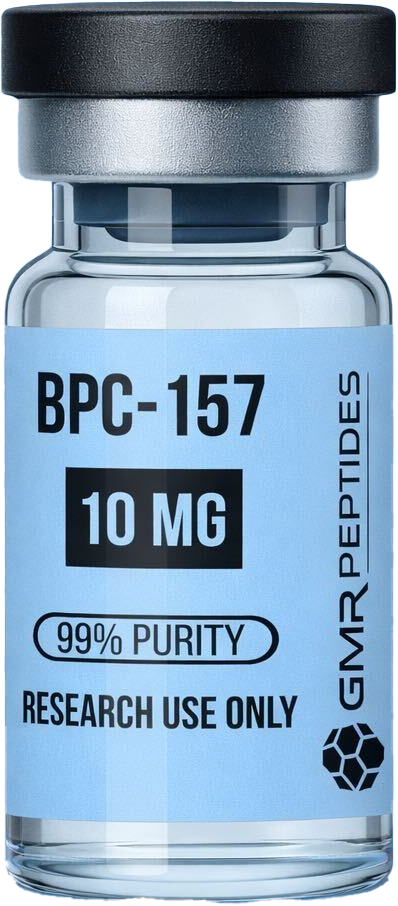
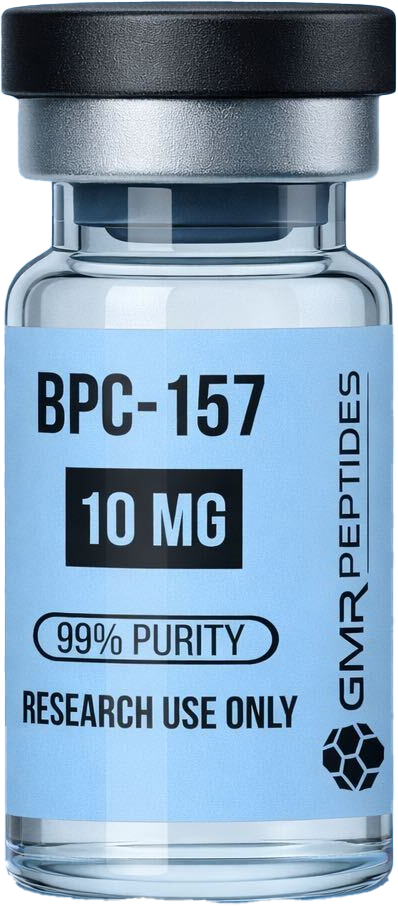
BPC-157 Research Peptide

Recovery Research

As a premier BPC-157 research peptide supplier, we provide this synthetic pentadecapeptide BPC-157 for laboratory investigation of nitric oxide signaling pathways, vascular response mechanisms, and fibroblast migration activity across controlled experimental tissue repair models.

Select Dosage

Bundle & Save

1 bottle

1 bottle

2 bottle

5% OFF
2 bottle

3 bottle

7.5% OFF
3 bottle
Bundle & Save

1 bottle

$44.99

2 bottle

Save 5%

3 bottle

Save 7.5%
$44.99

31 in stock

. ships today if ordered before 3pm ET

per 10mg vial

SSL 256-bit

Secure Checkout

Free shipping

On orders over $200

60-day returns

Money-back guarantee

🚚 Get 2 day shipping when you spend $250 or More

🚚 Free shipping over $200

🔄 60-day money back

🔒 SSL Secure

📦 Discreet packaging

We Accept

variation
gallery

🔬 Research Use Only

BPC-157 Research Peptide

Recovery Research

As a premier BPC-157 research peptide supplier, we provide this synthetic pentadecapeptide BPC-157 for laboratory investigation of nitric oxide signaling pathways, vascular response mechanisms, and fibroblast migration activity across controlled experimental tissue repair models.

Select Dosage

Bundle & Save

1 bottle

1 bottle

2 bottle

5% OFF
2 bottle

3 bottle

7.5% OFF
3 bottle
$44.99

🚚 Get 2 day shipping when you spend $250 or More

🚚 Free shipping over $200

🔄 60-day money back

🔒 SSL Secure

📦 Discreet packaging

We Accept

99%+ Purity Guaranteed

Every batch verified by accredited US labs

Shipment Protection

Every order fully covered

60-Day Money Back

No questions asked

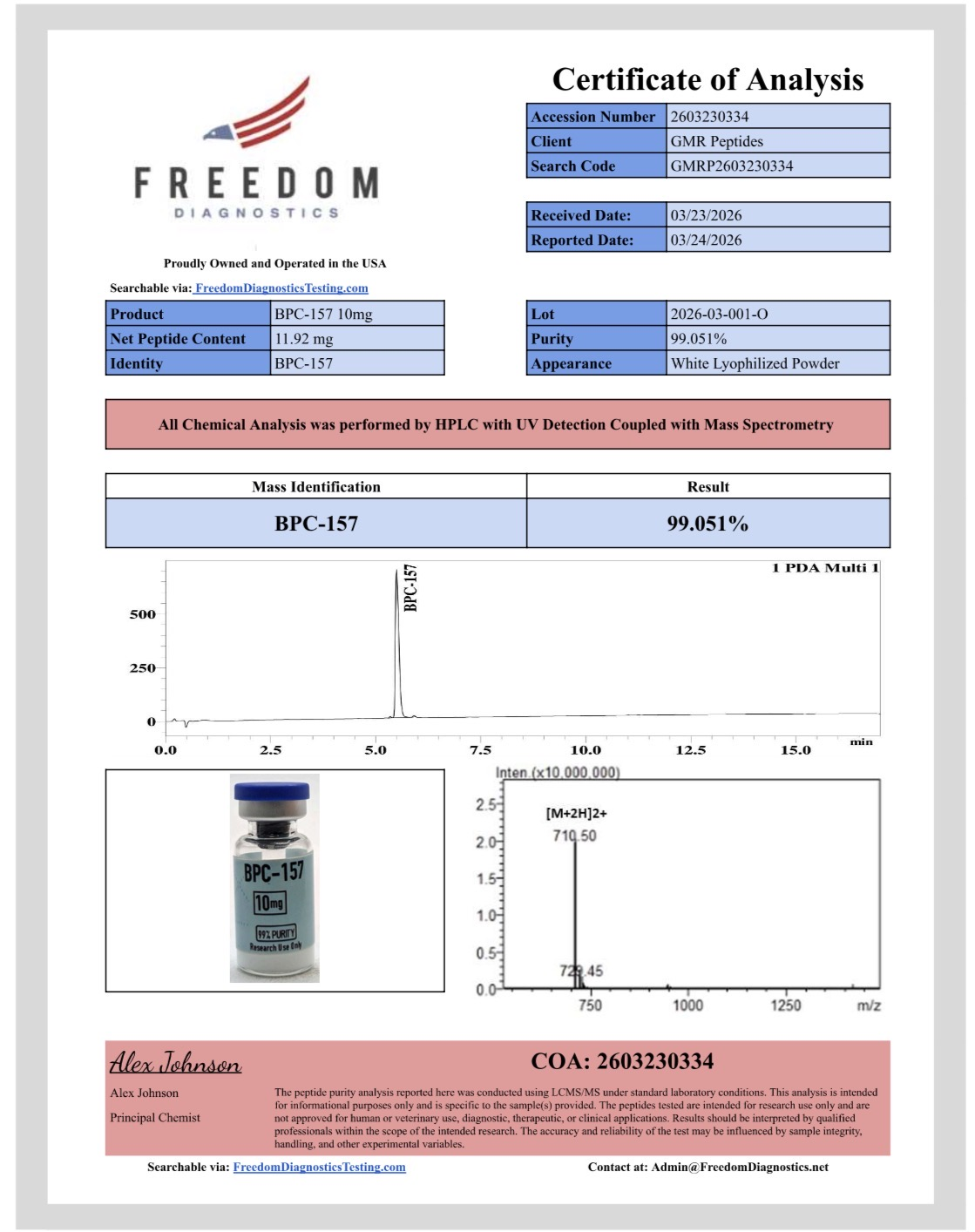
Certificate of Analysis and Purity Verification

🧪 Lab Verified

Each batch of BPC-157 undergoes independent analytical verification using validated HPLC and
mass spectrometry methods to confirm structural identity, purity consistency, and formulation
integrity for laboratory research supply distribution

BPC-157 - 10mg Vial

Lot #2026-03-001-O

PASS
0%

Verified Purity
Labeled 10mg
Actual 11.92 mg
Tested 03/24/2026
Method HPLC with UV Detection coupled with Mass Spectrometry (LCMS/MS)
Lab Freedom Diagnostics
Status In Stock
Download Certificate

GHR SIGNALING

Observed growth hormone receptor signaling upregulation in laboratory models

Pilot

RESEARCH DATA

Data from structured experimental pilot studies regarding biomarker response

200+

PUBLICATIONS

Peer-reviewed preclinical literature focusing on peptide signaling

No LD50

Achieved

No lethal dose reached in standard preclinical toxicology models

How BPC-157 Functions in Experimental Signaling Models

Preclinical investigations evaluate BPC-157 across signaling environments involving VEGF pathway interaction activity, nitric oxide modulation behavior, cytoskeletal organization dynamics, and receptor level vascular response systems.

VEGF
RESEARCH SIGNALING MECHANISM

Multi-Pathway Signaling Activity

BPC-157 is evaluated for its interaction with several interconnected biological pathways in preclinical models. Research focuses on cellular signaling mechanisms, vascular response pathways, and endothelial activity to observe how it modulates experimental environments.

VEGF Primary

VEGFR2 Pathway

Vascular Endothelial Growth Factor Receptor 2

  • Evaluated for vascular response activity
  • Studied for endothelial signaling
  • Observed in angiogenesis models
NO Modulatory

Nitric Oxide System

eNOS/Nitric Oxide Signaling

  • Modulates vascular tone markers
  • Investigated for signaling response
  • Studied in ischemic research models
GF Supportive

Growth Factor Pathways

FAK-paxillin, JAK-2, ERK1/2

  • Observed in cell migration studies
  • Evaluated for structural signaling
  • Studied for receptor responsiveness
↗ Nature Scientific Reports — Vascular Mechanism Study
VEGFR2

VEGFR2-Akt-eNOS Signaling Cascade

BPC-157 activity in the VEGFR2 pathway is studied for promoting receptor internalization and downstream signaling. This interaction is investigated within the Akt-eNOS cascade and its effect on nitric oxide production in research models.

Research Note: BPC-157 is evaluated for VEGFR2 expression upregulation and receptor internalization activity within preclinical ischemic tissue models.
VEGFR2 Expression ↑ Observed Upregulation
Receptor Internalization ↑ Enhanced Signaling
Akt Phosphorylation ↑ Time-dependent
eNOS Activation ↑ Nitric Oxide Marker
GHR

GHR Upregulation & Structural Signaling

Investigations show BPC-157 increases Growth Hormone Receptor (GHR) expression in experimental settings. This activity is studied for its role in amplifying biological signaling markers within controlled research environments.

Key Research Finding: GHR expression markers showed a 7-fold increase in treated experimental tissue, indicating enhanced receptor responsiveness.
GHR Expression (Day 3) 7× increase observed
FAK Phosphorylation ↑ Dose-dependent
Paxillin Activation ↑ Enhanced
Cell Migration Speed ↑ 70% increase in vitro
✦ Preclinical Research

Observed Signaling Activity in Preclinical Models

Laboratory investigations involving BPC-157 commonly explore angiogenesis associated signaling pathways, fibroblast migration activity, and nitric oxide pathway modulation across tendon, gastrointestinal, and vascular experimental systems.

📋 Systematic Review — Preclinical Data
95% Observed Fibroblast Outgrowth
LABORATORY METRICS

Key Preclinical Findings

Tendon Fibroblast Outgrowth 95%
Cell Migration Activity 90%
Cell Survival Under Stress 85%
VEGFR2 Expression 88%
🔬 Key Finding: BPC-157 dose-dependently increased cell migration, FAK/paxillin phosphorylation, and cell survival under oxidative stress in tendon fibroblast models.
↗ View Research Database
📈 Research Outcomes

Research Success Metrics

Summary of findings from peer-reviewed laboratory studies:

VEGFR2 Expression
Upregulation Observed Experimental tissue models
100% Batch Purity
Consistent Integrity Analytical verification
Nitric Oxide Modulation
Pathway Activation Vascular research models
⚠️ Laboratory Use Only: This data is derived from preclinical research. Human safety and efficacy have not been established. Not for human or veterinary use.
🧪 Preclinical Evidence

Observed Effects in Research Models

Reproducible signaling findings across laboratory and cellular models:

Cell Migration Indicators 90%
Vascular Signaling Response 88%
Cytoskeletal Signaling Activity 85%
💡 Mechanism: Effects are mediated primarily through VEGFR2-Akt-eNOS signaling pathway activation and FAK-paxillin phosphorylation markers.
↗ Research Publication Index
📋 Comparative Analysis

Experimental Response Markers

Observed changes in signaling intensity within preclinical research models:

GHR Expression Upregulation
eNOS Activation Markers ↑ Observed
Akt Phosphorylation Time-dependent
↗ Laboratory Methodology Reports

Research Applications in Laboratory Settings

BPC-157 is examined within structured experimental environments investigating endothelial signaling response behavior, connective tissue interaction pathways, vascular activity models, and peptide mediated cellular migration dynamics.

Connective
TISSUE

Observed fibroblast outgrowth and collagen synthesis markers

↗ Research Publication
Vascular
RESPONSE

Analyzed for stability in varied pH environments

↗ Methodology Report
Neural
SIGNALING

Neurotransmitter modulation pathways under investigation

↗ Laboratory Study
Cellular
MIGRATION

Evaluated in structured experimental tissue models

↗ Preclinical Data
🦴 MUSCULOSKELETAL MODELS

Experimental Tissue Signaling

Preclinical research evaluates tissue repair markers within laboratory experimental systems.

Fibroblast migration indicators Observed
VEGF pathway interaction level Active
Nitric oxide modulation markers Analyzed
🔬 Research Detail: BPC-157 is studied for its role in FAK-paxillin signaling pathway activation and its influence on cell migration dynamics.
Status: Preclinical Investigation
🧪 VASCULAR & GASTRIC MODELS

Experimental Integrity Analysis

Peptide stability and signaling response behavior evaluated in specialized laboratory environments.

Stability Testing pH Neutrality Analyzed
Signal Modulation Pathway mapping
Tissue Interaction Cellular model testing
Vascular Response Angiogenesis signaling
Usage: Strictly for Laboratory Research
🧠 NEURAL SIGNALING

Neural System Research

Brain-specific signaling and neurotransmitter modulation pathways under review.

🔬
Analytical neurotransmitter interaction studies
✨ Research Focus: Modulation behavior involving serotonin and dopamine systems is a key area of preclinical neural investigation.
Context: Experimental Signaling Research
🔗 ANALYTICAL COMBINATIONS

Complementary Research Mechanisms

Laboratory studies often examine BPC-157 alongside other research compounds to map distinct signaling pathways.

BPC-157 Domain VEGFR2/Angiogenesis
Secondary Peptide Domain Actin regulation pathways
Co-Study Rationale Complementary dynamics
Verification HPLC/MS analysis
🔬 Lab Notice: Combined applications are evaluated strictly within animal and cellular models to identify synergistic signaling patterns.
Type: Research Integration Data

Research Handling and Experimental Context

BPC-157 is supplied strictly for laboratory research use only and is not intended for diagnostic, therapeutic, veterinary, or human application.

🔬 LABORATORY OBSERVATIONS
High

Structural Integrity

STABLE
99%

Purity Profile

VERIFIED
⚠️ THEORETICAL FRAMEWORK

Experimental Considerations

As BPC-157 interacts with angiogenesis pathways (vascular signaling), research models prioritize the mapping of these effects within controlled tissue environments.

• Pro-angiogenic signaling behavior is a primary study area
• Long-term interaction pathways require further modeling
• Not approved for clinical or veterinary administration
• Strictly for in-vitro and preclinical investigation
📊 PRECLINICAL PARAMETERS

Preclinical Safety Summary

Toxicity Marker (LD50) Not observed
Acute Response Consistent
Chronic 6-Month Study Established Data
Metabolic Pathway Identified
💡 No lethal dose reached in preclinical toxicology assessments.
💡 No negative impact detected on primary organ system models.
💡 Analytical integrity maintained across varied pH environments.
🚫 HANDLING PROTOCOLS

Important Research Context

Supplied as a lyophilized research powder Laboratory investigation use only WADA S0 category — Prohibited in sport Analytical Grade Verification (HPLC/MS) Not for human consumption or application Reconstitution protocols required for research
REGULATORY COMPLIANCE

Regulatory Status

⚠️ Classified for laboratory research only
⚠️ Not an FDA approved therapeutic agent
⚠️ Subject to regional research chemical regulations
⚠️ Not intended for clinical diagnostic use
💡 Researcher Notes
  • Preclinical data highlights consistent signaling activity in connective tissue models.
  • Analytical verification (HPLC) ensures researchers receive chemically accurate compounds.
  • Storage at -20°C is recommended for long-term stability of the lyophilized peptide.

Compound Information

Technical specifications and molecular profiling

🔬 MOLECULAR PROFILE

Synthetic Pentadecapeptide BPC-157

A stable 15-amino acid sequence under investigation for its role in cellular migration and signaling dynamics.

Synthetic peptide 15 amino acids
Type Synthetic pentadecapeptide
CAS Number 137525-51-0
Molecular Weight 1419.5 g/mol
Amino Acids 15
Sequence GEPPPGKPADDAGLV
Formula C62H98N16O22
↗ PubChem Database
🧊 STORAGE REQUIREMENTS

Stability & Handling

Analytical grade stability verified across diverse temperature ranges for laboratory research.

Lyophilized stability Protect from light Resistant to degradation
❄️
Lyophilized (powder)
-20°C ・ optimal stability
💉
Reconstituted
2-8°C ・ laboratory use timeframe
🧪
pH Stability
Stable in varied pH media
📋 RESEARCH STATUS

Experimental Context

Preclinical investigational compound focused on mapping vascular response mechanisms.

Research status Preclinical/Laboratory
Approval Not FDA Approved
Classification Research Peptide
Primary Focus Nitric Oxide Modulation
Signaling Study VEGF Pathway Interaction
Availability Strictly Laboratory Use
↗ View Analytical Reports

❓ Common Questions

Frequently Asked
Questions

Research focuses on evaluating BPC-157 across signaling environments involving VEGF pathway interaction, nitric oxide modulation, and cytoskeletal organization dynamics.

📚 Research Bibliography

Sources & References

All clinical data and research findings cited on this page are sourced from peer-
reviewed journals and official publications.

HSS Journal

Emerging Use of BPC-157 in Orthopaedic Sports Medicine: A Systematic Review

Vasireddi N, Hahamyan H, Salata MJ, et al.
2025 PMID: 40756949
Alternative Therapies in Health and Medicine

Safety of Intravenous Infusion of BPC157 in Humans: A Pilot Study

Lee E, Walker C, Ayadi B
2025 PMID: 40131143
Pharmaceuticals (MDPI)

Multifunctionality and Possible Medical Application of the BPC 157 Peptide

Józwiak M, Bauer M, Kamysz W, Kleczkowska P
2025 DOI: 10.3390/ph18020185
Frontiers in Pharmacology

Pharmacokinetics, distribution, metabolism, and excretion of BPC 157

He L, Feng D, Guo H, et al.
2022 DOI: 0.3389/fphar.2022.1026182
Neural Regeneration Research

Pentadecapeptide BPC 157 and the central nervous system

Vukojevic J, Milavić M, Perović D, et al.
2022 PMID: 34380875
Scientific Reports

Modulatory effects of BPC 157 on vasomotor tone and signaling pathway

Hsieh MJ, Lee CH, Chueh HY, et al.
2020 PMID: 33046803
Regulatory Toxicology and Pharmacology

Preclinical safety evaluation of body protective compound-157

Xu C, Sun L, Ren F, et al.
2020 PMID: 32334036
Gut and Liver

Stable Gastric Pentadecapeptide BPC 157, Robert's Stomach Cytoprotection Revisited

Sikiric P, Seiwerth S, et al.
2019 DOI: 10.5009/gnl18490
Growth Hormone & IGF Research

BPC-157 enhances growth hormone receptor expression in injured tendon tissue

Staresinic M, Sebecic B, et al.
2018 DOI: 10.1016/j.ghir.2018.02.001
Journal of Molecular Medicine

Therapeutic potential of pro-angiogenic BPC157 associated with VEGFR2 activation

Hsieh MJ, Liu HT, Wang CN, et al.
2017 PMID: 27847966
Current Neuropharmacology

Brain-gut Axis and Pentadecapeptide BPC 157: Theoretical and Practical Implications

Sikiric P, Seiwerth S, Rucman R, et al.
2016 PMID: 27138887
ClinicalTrials.gov

PCO-02 - Safety and Pharmacokinetics Trial

ClinicalTrials.gov Archive
2015 PMID: NCT02611271
Journal of Applied Physiology

The promoting effect of BPC 157 on tendon healing involves cell migration

Chang CH, Tsai WC, Lin MS, et al.
2011 PMID: 21030672
Journal of Orthopaedic Research

Osteogenic effect of BPC-157 on the healing of segmental bone defect

Sebecic B, Nikolic V, Sikiric P, et al.
1999 PMID: 10071911
Multiple Sources

BPC-157 healing timeline observations from preclinical studies

Peptide Research Group
2024 DOI: N/A
Scientific Reports

Modulatory effects of BPC 157 on Src-Cav-1-eNOS signaling pathway

Hsieh MJ, et al.
2020 DOI: 10.1038/s41598-020-74022-y

⚠️ Important Research Notice

This product is sold exclusively for in vitro research and educational purposes. It is not intended for human or veterinary use, and is not intended to diagnose, treat, cure, or prevent any medical condition or disease. All clinical trial data, research findings, and scientific information presented on this page are sourced from peer-reviewed academic publications. This content is provided for educational reference only and does not constitute medical advice, product claims, or treatment recommendations. By purchasing this product, the buyer confirms they are a qualified researcher and will use it strictly in accordance with all applicable federal, state, and local laws and regulations. GMR Peptides assumes no liability for any misuse of this product outside of a research context.

Website Exclusive

Welcome, researcher

Enter your email to unlock 20% off your first research supply order.

Please enter a valid email address.
No spam, unsubscribe anytime.
Your 20% discount is unlocked
PEP20

Shop Now With 20% Off
Apply as Affiliate