
CJC-1295 / Ipamorelin - 10mg Vial
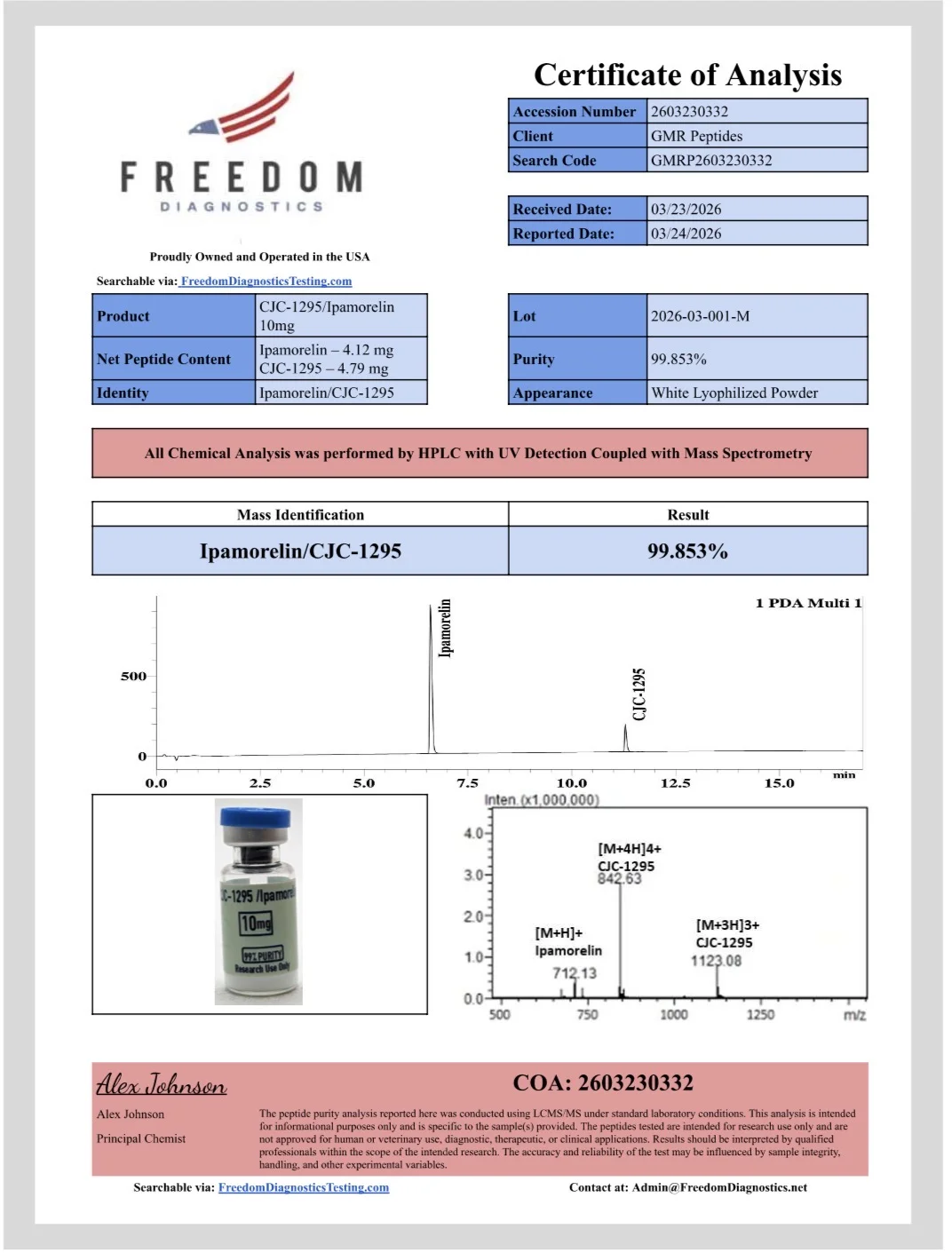
Lot #2026-03-001-M
PASS
0%
Verified Purity
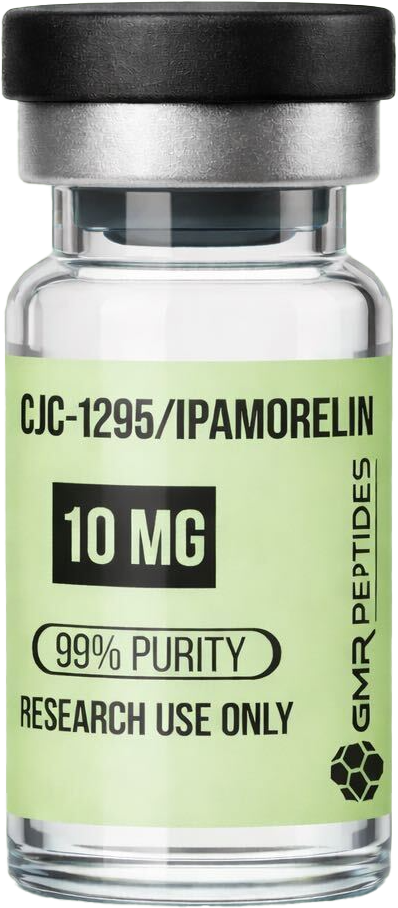
CJC-1295 / Ipamorelin Research Peptide is a dual-component receptor pathway research peptide supplied for laboratory peptide signaling studies focused on growth hormone secretagogue pathway activity. This synthetic growth hormone secretagogue research peptide is positioned for experimental model evaluation of pulsatile signaling dynamics, receptor interaction activity, and controlled pathway response under research conditions.


17 in stock
. ships today if ordered before 3pm ET
Secure Checkout
On orders over $200
Money-back guarantee
🚚 Get 2 day shipping when you spend $250 or More
🚚 Free shipping over $200
🔄 60-day money back
🔒 SSL Secure
📦 Discreet packaging

CJC-1295 / Ipamorelin Research Peptide is a dual-component receptor pathway research peptide supplied for laboratory peptide signaling studies focused on growth hormone secretagogue pathway activity. This synthetic growth hormone secretagogue research peptide is positioned for experimental model evaluation of pulsatile signaling dynamics, receptor interaction activity, and controlled pathway response under research conditions.
🚚 Get 2 day shipping when you spend $250 or More
🚚 Free shipping over $200
🔄 60-day money back
🔒 SSL Secure
📦 Discreet packaging

Third-party peptide purity verification is available for each batch.

Secure fulfillment and protected handling for laboratory research supply orders.

Order assurance applies to unopened research supply items in accordance with site policy.
Each batch of this CJC-1295 / Ipamorelin research peptide is accompanied by analytical documentation
intended to support peptide purity verification, identity review, and lot-level transparency. Certificate
presentation should emphasize laboratory assay reporting, analytical method listing, and batch traceability
rather than promotional claims.
Lot #2026-03-001-M
Verified Purity

Third-Party Independent Verification — All GMR Peptides products are tested by accredited external laboratories using HPLC and Mass Spectrometry. We never self-certify. Results are published on every product page with no exceptions.


Laboratory Peptide Signaling Dynamics
This combined formulation supports laboratory model evaluation of complementary receptor pathway research peptide behavior. CJC-1295 interacts with growth hormone-releasing hormone pathways, while Ipamorelin acts as a selective ghrelin receptor agonist. Together, they allow for the observation of pulsatile signaling dynamics and timing-related receptor interaction activity.
Receptor timing behavior
Selective agonist behavior
Pathway coordination
The blend combines a synthetic growth hormone secretagogue analog with a selective ghrelin receptor agonist to examine coordinated receptor activation. This allows researchers to monitor the magnitude of observed pathway response and subject distribution across differentiated study populations.
Experimental reports have described measurable growth hormone axis signaling after exposure to this receptor pathway research peptide. Charts and monitored markers in controlled settings reflect age-associated pathway response variability and duration of combined secretagogue activation.
Summary of laboratory model and mechanistic signaling observations
Data from documented laboratory peptide signaling studies
Documented interactions in GH secretagogue research models
GH secretagogue research suggests pathway activity that supports protein synthesis and lipid oxidation modeling.
Elevated GH and IGF-1 axis activity is documented to correlate with cellular regeneration markers in laboratory repair models.
Secretagogues are evaluated for their interaction with slow-wave phase signaling during nocturnal cycles in models.
Documentation shows GH secretion decreases significantly per decade. Research focuses on the preservation of secretagogue response in aging models.
Documented observations from clinical and preclinical research
In contrast to earlier GHRP generations, Ipamorelin research shows no statistically significant elevation of:
This synthetic growth hormone secretagogue research peptide combines two characterized components used in laboratory peptide signaling studies. The copy should support technical clarity, receptor pathway research peptide positioning, and peptide purity verification language.
A tetrasubstituted 29-amino acid peptide analog of Growth Hormone Releasing Hormone (GHRH).
A highly selective pentapeptide Ghrelin receptor agonist with documented metabolic stability.
Blended at precise ratios to evaluate the synergistic potential of concurrent GHRH and GHSR pathway activation.
CJC-1295 formats are evaluated in research according to their signaling duration characteristics. In laboratory
peptide signaling studies, DAC-linked formats are generally described as having a longer observable activity
window, while non-DAC formats are discussed in relation to shorter pulse-oriented signaling behavior.
The combination is used in experimental models to study complementary receptor pathway activity. CJC-1295
is associated with growth hormone-releasing hormone pathway interaction, while Ipamorelin is associated
with ghrelin receptor pathway activation, allowing coordinated observation of peptide signaling dynamics.
In research literature, Ipamorelin is often described as a more selective receptor pathway research peptide. It
is commonly examined for targeted ghrelin receptor interaction activity with reduced off-pathway signaling
compared with broader secretagogue compounds.
For research-supply positioning, this question should be reframed around experimental protocol design rather
than use instructions. Recommended replacement wording is: “How is this compound combination evaluated
in laboratory peptide signaling studies?”
Replace this question with: “What signaling behavior has been observed in experimental models?” The
answer should summarize published experimental observations, monitored pathway activity, and model
specific signal duration findings using neutral language.
Replace direct comparison language with: “How does this compound differ from direct hormone administration
models?” The answer should state that CJC-1295 / Ipamorelin is studied for upstream receptor pathway
research peptide behavior rather than direct hormone replacement.
For research supply positioning, replace with: “What experimental variables are commonly controlled in
published studies?” The answer may reference protocol controls, endocrine marker monitoring, and exclusion
criteria described in research materials.
All clinical data and research findings cited on this page are sourced from peer-
reviewed journals and official publications.
This product is sold exclusively for in vitro research and educational purposes. It is not intended for human or veterinary use, and is not intended to diagnose, treat, cure, or prevent any medical condition or disease. All clinical trial data, research findings, and scientific information presented on this page are sourced from peer-reviewed academic publications. This content is provided for educational reference only and does not constitute medical advice, product claims, or treatment recommendations. By purchasing this product, the buyer confirms they are a qualified researcher and will use it strictly in accordance with all applicable federal, state, and local laws and regulations. GMR Peptides assumes no liability for any misuse of this product outside of a research context.
This website contains products for research use only. By entering, you confirm that you are 21 years of age or older.
Enter your email to unlock 20% off your first research supply order.
By clicking "I Agree", you acknowledge that all products are strictly for laboratory research purposes and are not for human consumption.