
GLOW Blend - 70mg Vial
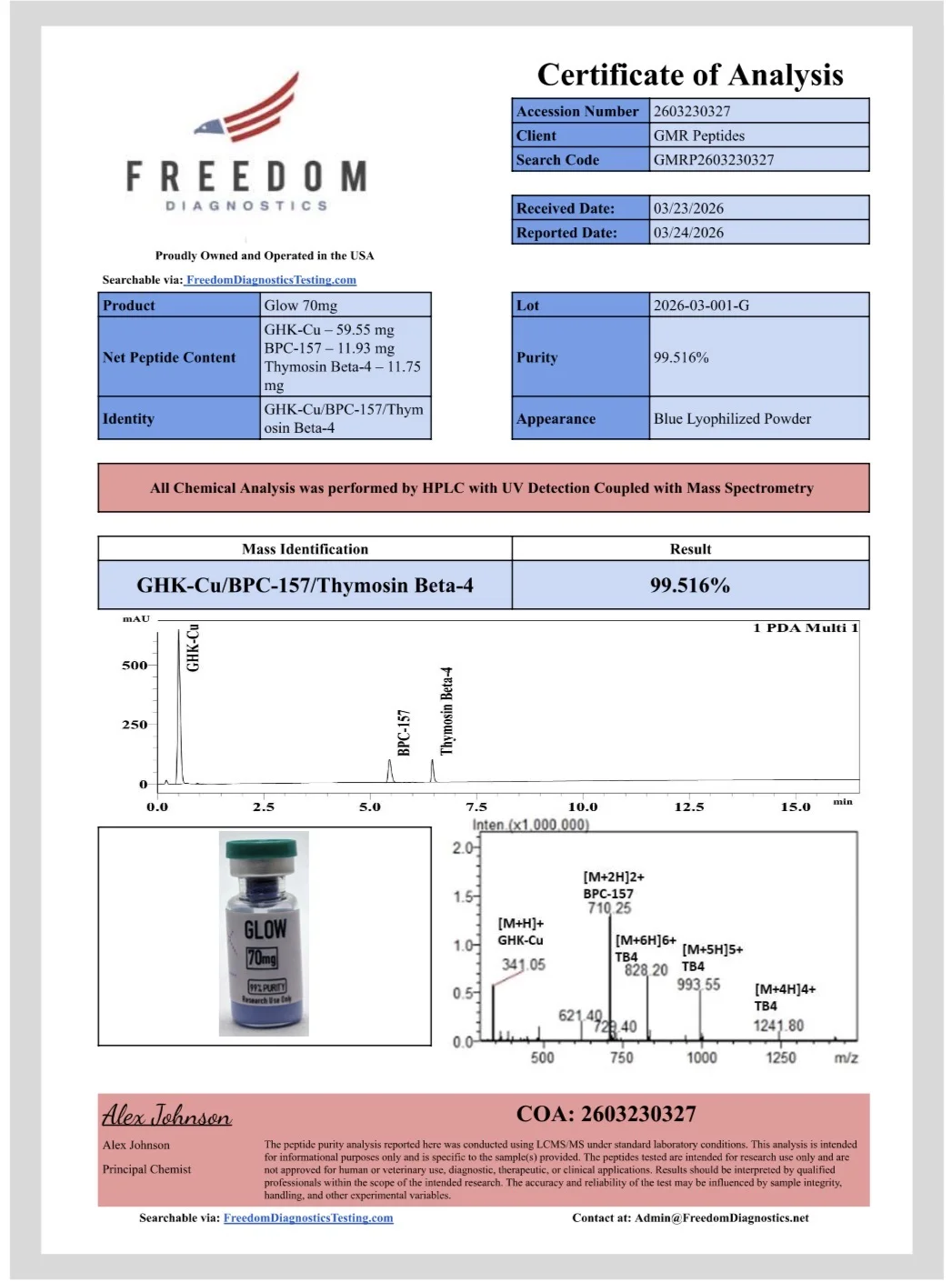
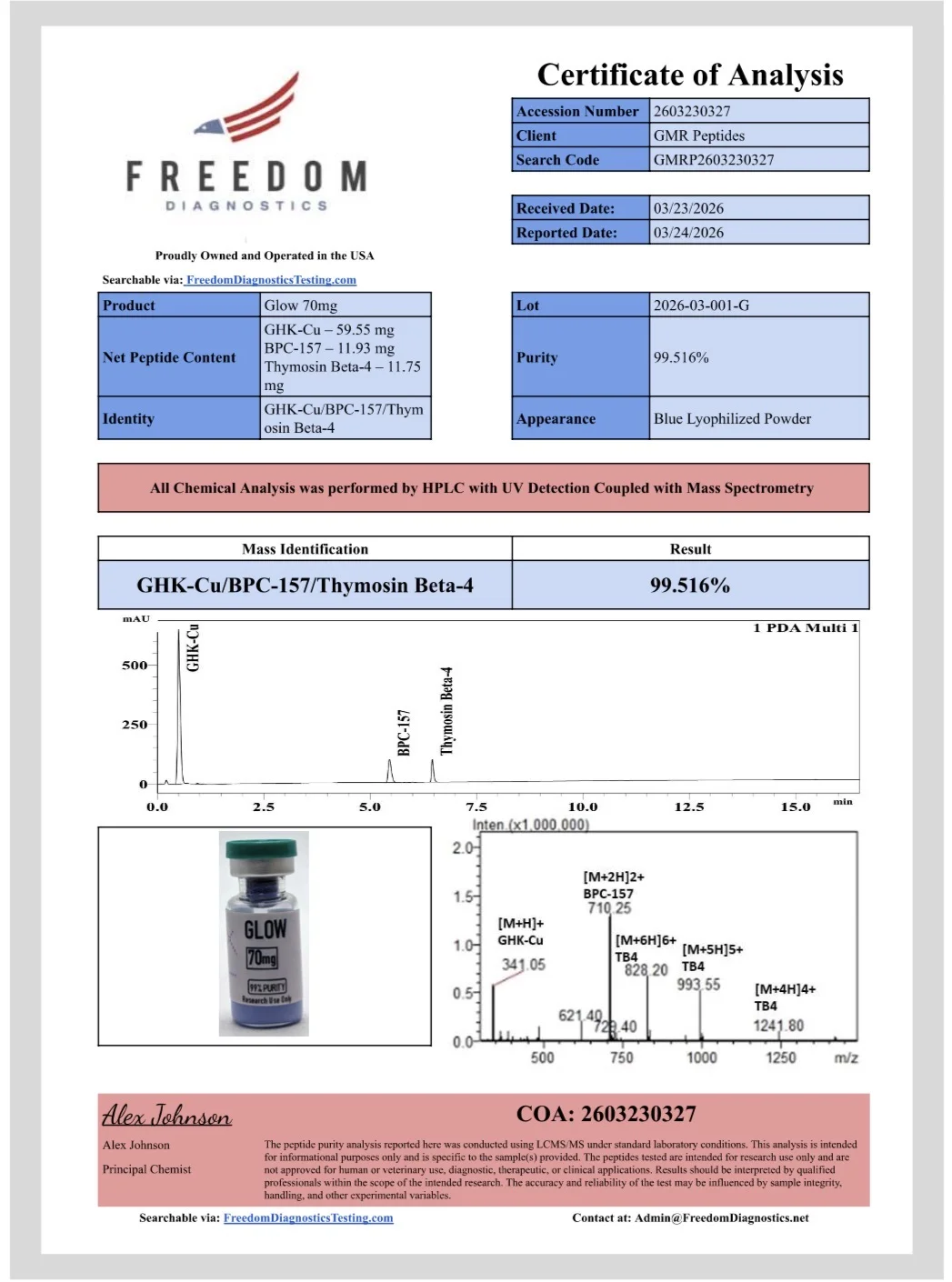
Lot #2026-03-001-G
PASS
0%
Verified Purity
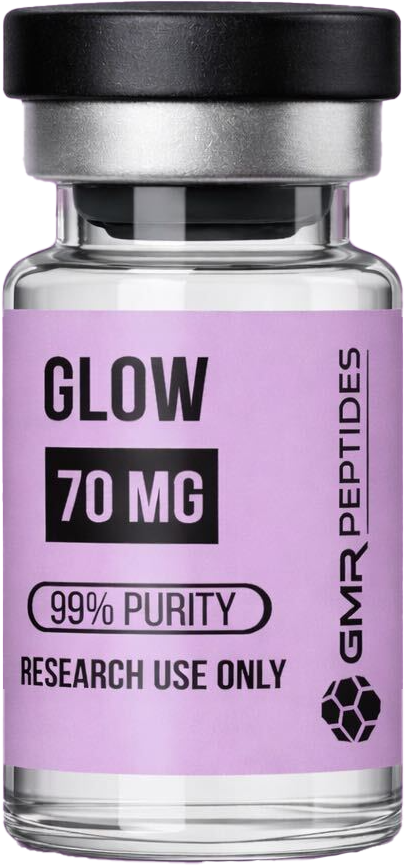
GHK-Cu research peptide blend (Glow Blend) combines GHK-Cu, BPC-157, and Thymosin Beta-4 in a structured multi-peptide laboratory research formulation prepared for controlled laboratory investigation of extracellular matrix signaling activity and peptide interaction behavior across experimental environments.


96 in stock
. ships today if ordered before 3pm ET
Secure Checkout
On orders over $200
Money-back guarantee
🚚 Get 2 day shipping when you spend $250 or More
🚚 Free shipping over $200
🔄 60-day money back
🔒 SSL Secure
📦 Discreet packaging

GHK-Cu research peptide blend (Glow Blend) combines GHK-Cu, BPC-157, and Thymosin Beta-4 in a structured multi-peptide laboratory research formulation prepared for controlled laboratory investigation of extracellular matrix signaling activity and peptide interaction behavior across experimental environments.
🚚 Get 2 day shipping when you spend $250 or More
🚚 Free shipping over $200
🔄 60-day money back
🔒 SSL Secure
📦 Discreet packaging

Every batch verified by accredited US labs

Every order fully covered

No questions asked
Each batch of Glow Blend is supported by independent analytical testing using HPLC and mass
spectrometry to confirm peptide identity, purity, and formulation consistency across laboratory
supply distribution.
Lot #2026-03-001-G
Verified Purity


Glow Blend is designed as a coordinated multi-component peptide formulation allowing researchers to examine signaling relationships between GHK-Cu, BPC-157, and Thymosin Beta-4 within structured experimental environments focused on extracellular matrix interaction pathways and cytoskeletal signaling behavior.
Vascular Endothelial Growth Factor Modeling
Thymosin Beta-4 Interaction (TB-500)
Copper Peptide Interaction (GHK-Cu)
Researchers evaluate this formulation when studying coordinated signaling behavior between copper-binding, actin-regulating, and extracellular matrix interaction pathways within laboratory research environments.
Laboratory investigations involving GHK-Cu, BPC-157, and Thymosin Beta-4 frequently evaluate peptide signaling relationships associated with extracellular matrix structure, actin-binding activity, and coordinated pathway interaction patterns across controlled multi-peptide experimental systems.
Primary observations documented within peer-reviewed research for each component peptide.
Researchers commonly evaluate multi-peptide formulations such as Glow Blend when studying coordinated signaling behavior between copper-binding peptides, actin-regulating peptides, and extracellular matrix interaction pathways within structured laboratory research environments.
GHK-Cu is evaluated for collagen synthesis markers, while BPC-157 and TB-500 are studied for epithelial interaction.
↗ Reference Analysis 2026TB-500 is analyzed for actin remodeling; BPC-157 for fibroblast viability; GHK-Cu for vascular signaling stability.
↗ Structural Study 2025Peptides are investigated for signaling modulation properties across different coordinated laboratory models.
↗ Mechanistic Review 2026Investigation of coordinated extracellular matrix signaling and cytoskeletal interaction pathways.
↗ Biological Systems 2024Glow Blend is studied in preclinical skin models for effects on dermal remodeling and extracellular matrix interaction pathways.
In musculoskeletal models, Glow Blend components are analyzed for their coordinated interaction with soft tissue signaling pathways.
Each component is investigated for signaling modulation within laboratory environments. GHK-Cu is analyzed for copper chelation dynamics and cytokine interaction.
Investigational data reported in laboratory and animal research models
Technical profiles and chemical standards for laboratory analysis
All clinical data and research findings cited on this page are sourced from peer-
reviewed journals and official publications.
GLOW is a triple-peptide blend containing BPC-157 (a 15-amino acid gastric peptide), TB-500 (a 43-amino acid thymosin beta-4 fragment), and GHK-Cu (a copper tripeptide). Each peptide targets different but complementary regenerative mechanisms, making the combination relevant for multi-pathway tissue repair research.
The Wolverine Stack contains only BPC-157 and TB-500, focusing on angiogenesis and cell migration. GLOW adds GHK-Cu, which brings collagen synthesis, gene modulation (4,000+ genes), and copper delivery mechanisms. This third component extends the blend's research applications to include skin regeneration, anti-aging pathways, and extracellular matrix remodeling.
Individually, these peptides have extensive preclinical research: BPC-157 has 200+ publications studying wound healing, GI protection, and tissue repair; TB-500 has 170+ publications on cell migration and musculoskeletal healing; GHK-Cu has 130+ publications on collagen synthesis, gene expression, and skin regeneration. Combination research is emerging but less extensive.
No. All three peptides are research compounds. BPC-157 and TB-500 are investigational peptides with no FDA approval and are banned by WADA. GHK-Cu is used in cosmetic formulations but is not approved as a therapeutic. GLOW is intended for laboratory and preclinical research applications only.
The three peptides target overlapping but distinct pathways: (1) Angiogenesis — BPC-157 (VEGF) and GHK-Cu (capillary growth) promote blood vessel formation; (2) Cell migration — TB-500 regulates actin for cellular movement; (3) ECM remodeling — GHK-Cu stimulates collagen while TB-500 reduces fibrosis; (4) Anti-inflammatory — all three modulate inflammatory mediators through different mechanisms.
Lyophilized (powder) form should be stored at -20°C for long-term stability. Once reconstituted, store at 2-8°C (refrigerated) and use within 7 days. Protect from light and avoid repeated freeze-thaw cycles. Each component has slightly different stability profiles, so follow manufacturer guidelines for specific formulations.
GLOW is studied in preclinical models for: (1) Skin regeneration and dermal remodeling; (2) Muscle and tendon repair; (3) Wound healing and tissue recovery; (4) Anti-inflammatory applications; (5) Extracellular matrix restoration. The combination approach targets multiple phases of the healing cascade simultaneously.
No. Glow Blend is supplied strictly for laboratory research use only and is not approved for diagnostic, therapeutic, veterinary, or human application.
This product is sold exclusively for in vitro research and educational purposes. It is not intended for human or veterinary use, and is not intended to diagnose, treat, cure, or prevent any medical condition or disease. All clinical trial data, research findings, and scientific information presented on this page are sourced from peer-reviewed academic publications. This content is provided for educational reference only and does not constitute medical advice, product claims, or treatment recommendations. By purchasing this product, the buyer confirms they are a qualified researcher and will use it strictly in accordance with all applicable federal, state, and local laws and regulations. GMR Peptides assumes no liability for any misuse of this product outside of a research context.
This website contains products for research use only. By entering, you confirm that you are 21 years of age or older.
Enter your email to unlock 20% off your first research supply order.
By clicking "I Agree", you acknowledge that all products are strictly for laboratory research purposes and are not for human consumption.