
KLOW Blend - 80mg Vial
Lot #2026-03-001-E
PASS
0%
Verified Purity
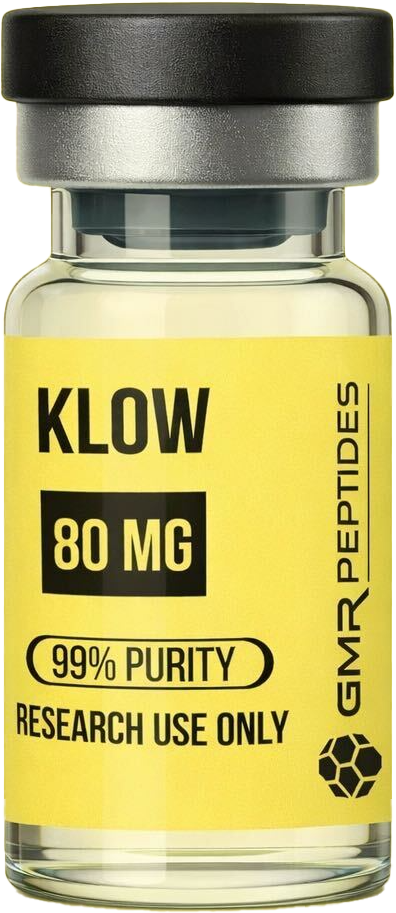
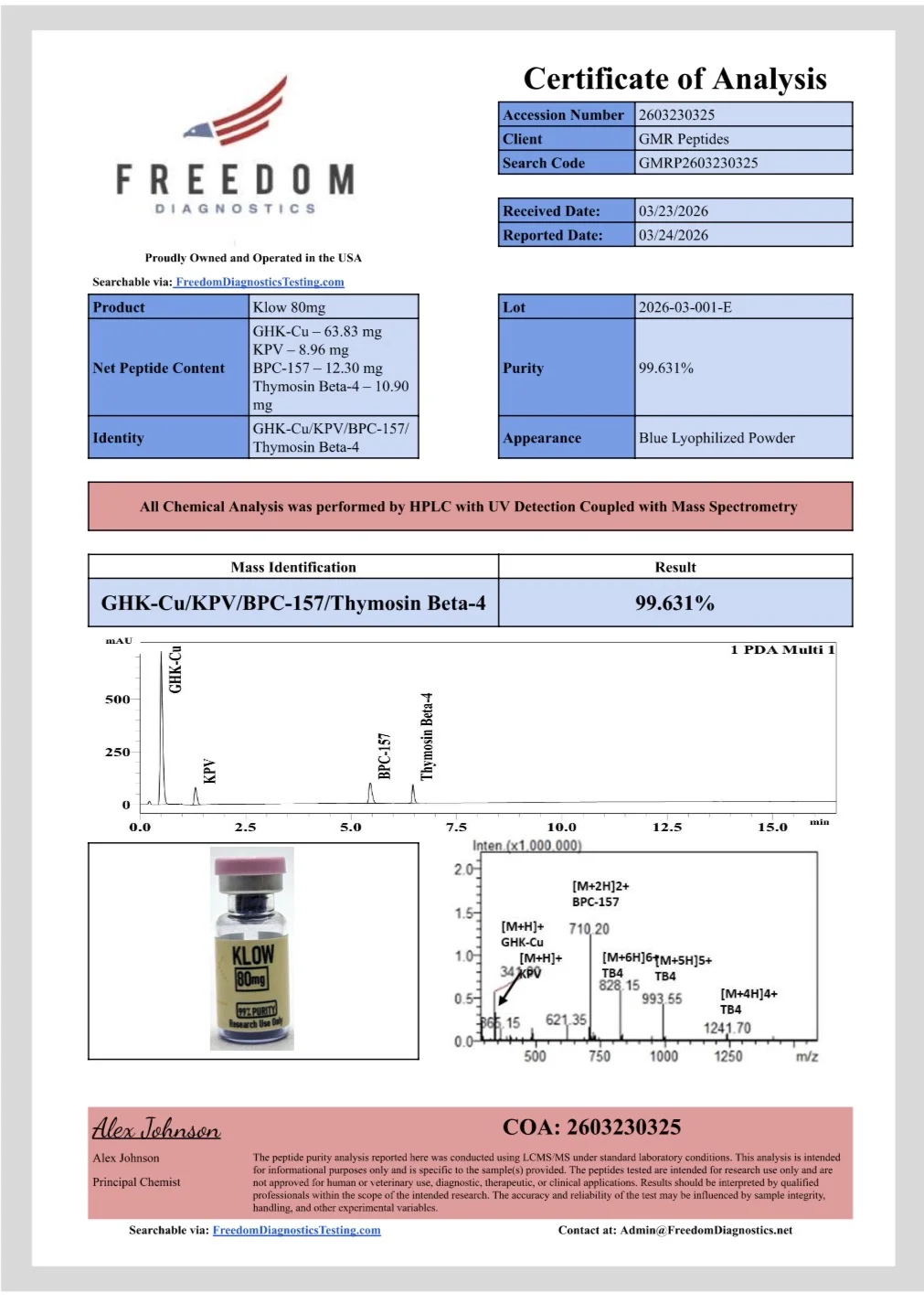
KLOW peptide blend is a multi-compound research peptide formulation combining GHK-Cu, KPV, BPC-157, and Thymosin Beta-4 (TB4) for laboratory investigation of peptide interaction models, extracellular signaling pathways, and coordinated multi-peptide research environments.


18 in stock
. ships today if ordered before 3pm ET
Secure Checkout
On orders over $200
Money-back guarantee
🚚 Get 2 day shipping when you spend $250 or More
🚚 Free shipping over $200
🔄 60-day money back
🔒 SSL Secure
📦 Discreet packaging


Every batch verified by accredited US labs

Every order fully covered

No questions asked
Each component within the KLOW Blend formulation is verified through independent analytical
testing to confirm identity, purity, and structural consistency.
Lot #2026-03-001-E
Verified Purity
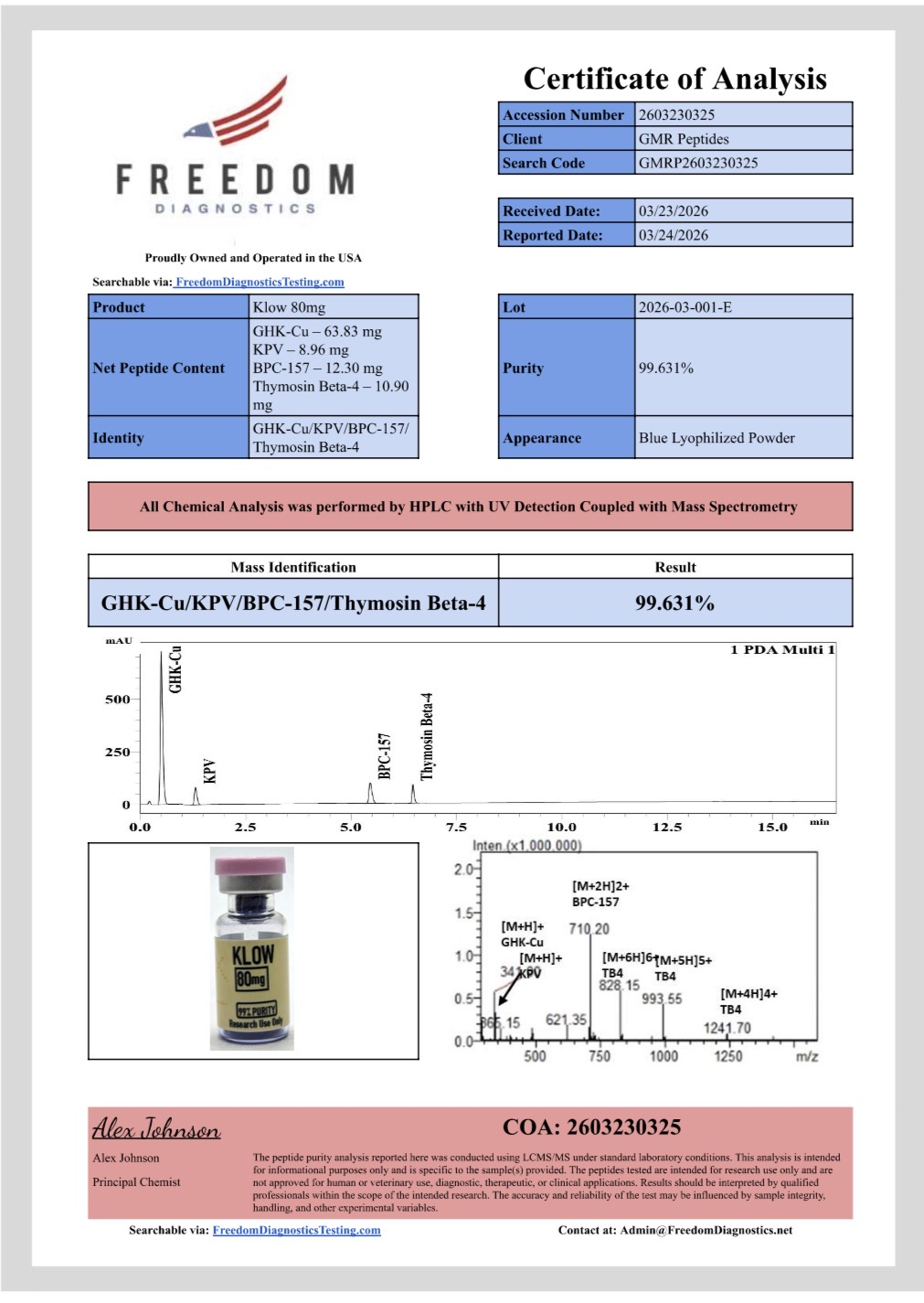


KLOW Blend combines four structurally distinct research peptides frequently examined in laboratory environments to evaluate coordinated signaling behavior across extracellular matrix pathways, peptide transport mechanisms, and multi pathway interaction models
KLOW Blend char structurally distinct research peptides (GHK-Cu, KPV, BPC-157, aur Thymosin Beta-4) ko combine karta hai taake shared experimental environments mein inke darmiyan coordinated signaling behavior aur molecular interaction models ka mushahida kiya ja sakay.
Vascular Endothelial Growth Factor Modeling
Cytoskeletal Remodeling Models
Copper Peptide Signaling Analysis
Pathway Coordination Research
KLOW Blend ke har component ko aik specific molecular signaling phase ke liye evaluate kiya jata hai. Researchers is blend ko multi-phase interaction behavior aur signaling response patterns ko samajhne ke liye istemal karte hain.
KPV (Lys-Pro-Val) aik tripeptide structure hai jo α-melanocyte-stimulating hormone (α-MSH) se derive kiya gaya hai. Research models mein ise PepT1-mediated cellular uptake aur intracellular signaling pathways ke liye examine kiya jata hai.
Multi compound peptide formulations such as KLOW Blend are commonly studied in controlled experimental settings designed to evaluate interaction behavior between copper binding peptides, signaling peptides, and extracellular matrix regulatory sequences within structured laboratory models.
Primary areas of investigation for component peptide structures
Researchers investigate multi peptide combinations to better understand how distinct signaling compounds interact within shared experimental environments. These models help evaluate pathway coordination, peptide stability relationships, and structural response patterns under controlled conditions.
Investigation into PepT1-mediated peptide transport and mucosal signaling models in laboratory environments.
↗ Dalmasso et al. 2008Evaluation of GHK-Cu and BPC-157 in coordinated extracellular matrix (ECM) stability and signaling research.
↗ Pickart & Margolina 2018Studies on TB-500 actin-binding activity and its role in fibroblast migration within controlled experimental systems.
↗ Chi et al. 2017Analysis of KPV and GHK-Cu regarding nuclear factor-κB (NF-κB) and TNF-α signaling pathway interactions.
↗ Luger et al. 2007KPV is a C-terminal tripeptide studied for its interaction with inflammatory signaling cascades. Research focuses on its role as a PepT1 ligand and its ability to modulate NF-κB activity within specialized laboratory cell lines.
Investigations into multi-peptide blends evaluate how constituent compounds like TB-500 and BPC-157 influence epithelial cell behavior and signaling stability in specialized tissue models.
GHK-Cu is analyzed for its copper-binding capacity and its resulting influence on extracellular matrix gene expression, including studies on collagen and elastin mRNA levels in lab models.
Technical molecular data for laboratory investigation
A multi-compound formulation designed for investigating coordinated signaling pathways.
Technical specifications for the Alpha-MSH C-terminal tripeptide fragment.
Current status within peer-reviewed literature and laboratory investigative models.
KLOW is a quad-peptide blend containing BPC-157 (a 15-amino acid gastric peptide), TB-500 (a 43-amino acid thymosin beta-4 fragment), GHK-Cu (a copper tripeptide), and KPV (a 3-amino acid α-MSH fragment). Each peptide targets different but complementary mechanisms, with KPV adding potent anti-inflammatory activity through NF-κB inhibition.
GLOW contains BPC-157, TB-500, and GHK-Cu, focusing on angiogenesis, cell migration, and collagen synthesis. KLOW adds KPV, which brings powerful NF-κB inhibition and anti-inflammatory activity. This fourth component is particularly relevant for inflammatory conditions and extends the blend's research applications to include gut inflammation and inflammatory skin conditions.
KPV (Lys-Pro-Val) is the C-terminal tripeptide of α-melanocyte-stimulating hormone (α-MSH). Unlike full-length α-MSH which works through melanocortin receptors, KPV is transported into cells via PepT1 transporters. Once inside cells, it inhibits NF-κB activation and reduces pro-inflammatory cytokine production. Importantly, PepT1 expression is upregulated during inflammatory bowel disease, making KPV particularly effective in inflamed gut tissue.
KPV's anti-inflammatory effects are NOT melanocortin receptor-mediated. Instead, KPV enters cells through the PepT1 di/tripeptide transporter, which is normally expressed in the small intestine and induced in the colon during IBD. This allows KPV to directly access intracellular inflammatory pathways at nanomolar concentrations, inhibiting NF-κB activation and reducing the duration of inflammatory signaling.
KPV has been studied in models of inflammatory bowel disease (DSS- and TNBS-induced colitis), contact dermatitis, cutaneous vasculitis, asthma, rheumatoid arthritis, and ocular inflammation. Research shows that oral KPV significantly reduces inflammation, body weight loss, and tissue damage in colitis models. Studies in Gastroenterology (2007) demonstrated that KPV's anti-inflammatory effect works through PepT1-mediated uptake and subsequent NF-κB/MAPK pathway inhibition.
No. All four peptides are research compounds. BPC-157 and TB-500 are investigational peptides with no FDA approval and are banned by WADA. GHK-Cu is used in cosmetic formulations but is not approved as a therapeutic. KPV is a naturally occurring peptide fragment used for research purposes. KLOW is intended for laboratory and preclinical research applications only.
Yes, research indicates KPV is effective via oral administration. Because KPV is transported by PepT1 (a di/tripeptide transporter expressed in the intestine), it can be absorbed intact from the gut. Studies in Gastroenterology showed that oral KPV reduced inflammation in colitis models. The other three components (BPC-157, TB-500, GHK-Cu) are typically administered via injection in research protocols.
Lyophilized (powder) form should be stored at -20°C for long-term stability. Once reconstituted, store at 2-8°C (refrigerated) and use within 7 days. Protect from light and avoid repeated freeze-thaw cycles. Each component has slightly different stability profiles, so follow manufacturer guidelines for specific formulations.
No. All products are supplied strictly for laboratory research use only. They are not approved for
human or veterinary use and are not intended for diagnostic or therapeutic applications.
All clinical data and research findings cited on this page are sourced from peer-
reviewed journals and official publications.
This product is sold exclusively for in vitro research and educational purposes. It is not intended for human or veterinary use, and is not intended to diagnose, treat, cure, or prevent any medical condition or disease. All clinical trial data, research findings, and scientific information presented on this page are sourced from peer-reviewed academic publications. This content is provided for educational reference only and does not constitute medical advice, product claims, or treatment recommendations. By purchasing this product, the buyer confirms they are a qualified researcher and will use it strictly in accordance with all applicable federal, state, and local laws and regulations. GMR Peptides assumes no liability for any misuse of this product outside of a research context.
This website contains products for research use only. By entering, you confirm that you are 21 years of age or older.
Enter your email to unlock 20% off your first research supply order.
By clicking "I Agree", you acknowledge that all products are strictly for laboratory research purposes and are not for human consumption.