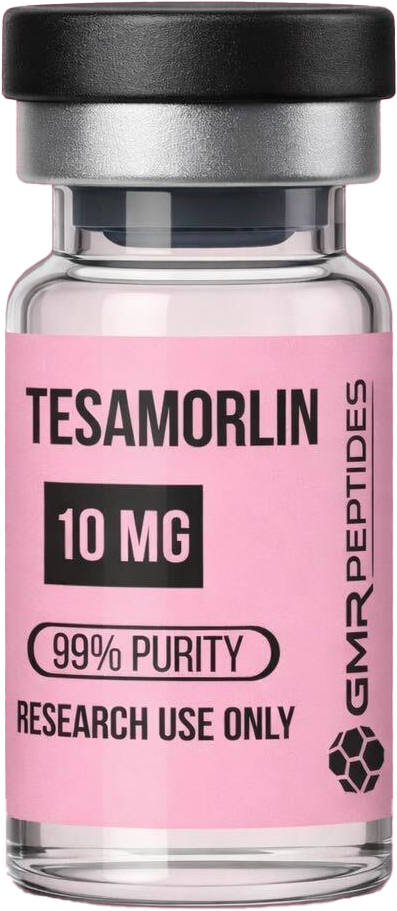
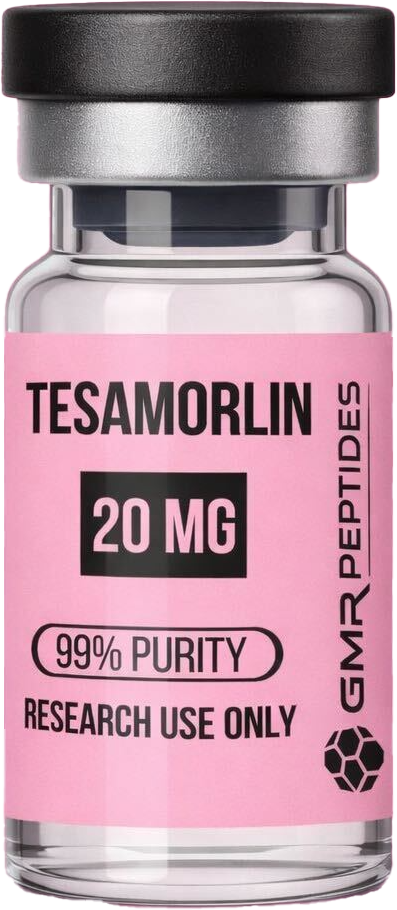
Tesamorelin - 20mg Vial
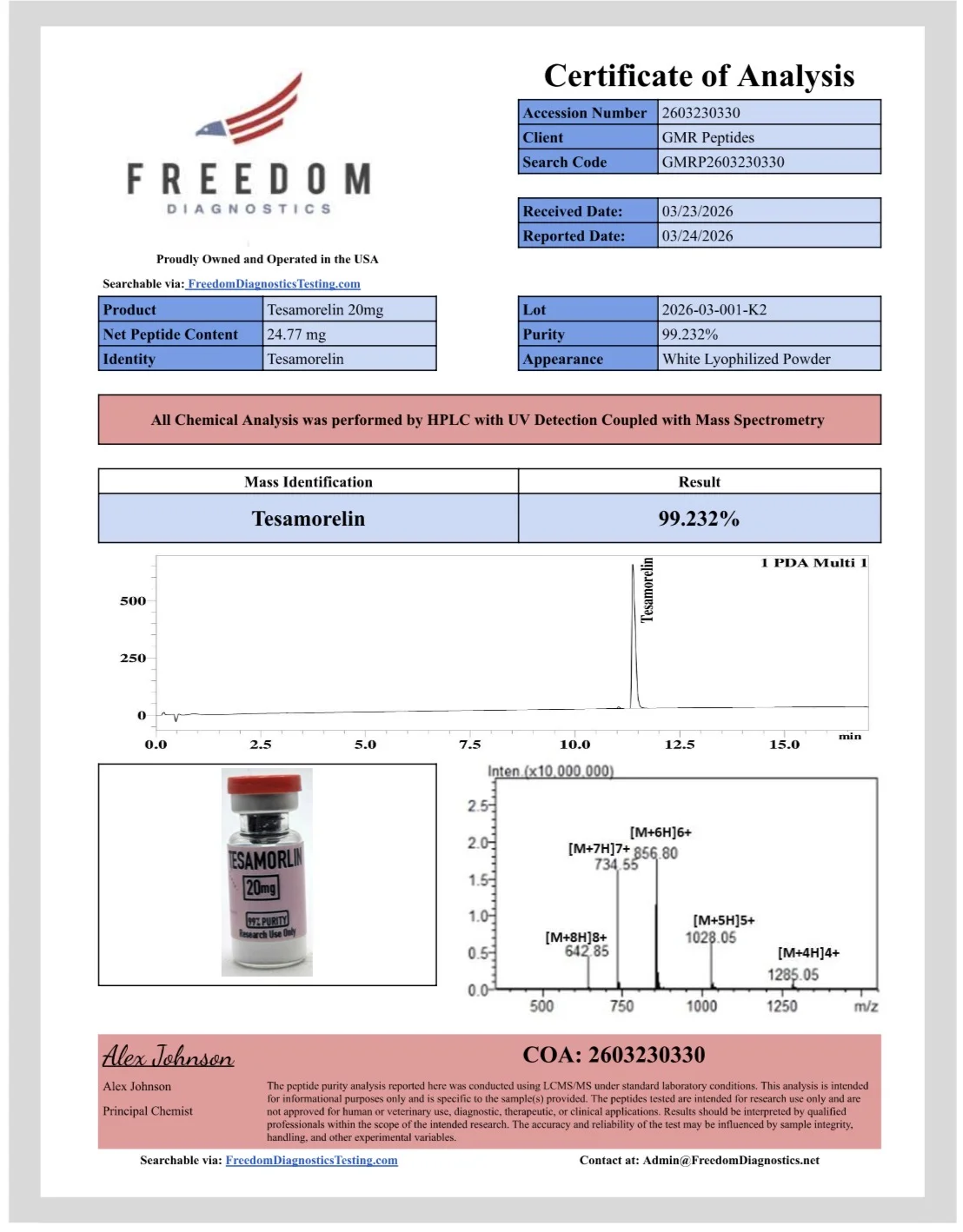
Lot #2026-03-001-K2
Verified Purity
Tesamorlin Research Peptide is a synthetic GHRH analogue research peptide supplied for laboratory peptide signaling studies, receptor interaction activity review, and pathway signaling behavior analysis. This receptor pathway research peptide is positioned for controlled laboratory model evaluation and is supported by lot-specific peptide purity verification.


90 in stock
. ships today if ordered before 3pm ET
Secure Checkout
On orders over $200
Money-back guarantee
🚚 Get 2 day shipping when you spend $250 or More
🚚 Free shipping over $200
🔄 60-day money back
🔒 SSL Secure
📦 Discreet packaging
Tesamorlin Research Peptide is a synthetic GHRH analogue research peptide supplied for laboratory peptide signaling studies, receptor interaction activity review, and pathway signaling behavior analysis. This receptor pathway research peptide is positioned for controlled laboratory model evaluation and is supported by lot-specific peptide purity verification.


🚚 Get 2 day shipping when you spend $250 or More
🚚 Free shipping over $200
🔄 60-day money back
🔒 SSL Secure
📦 Discreet packaging

Every batch verified by accredited US labs

Every order fully covered

No questions asked
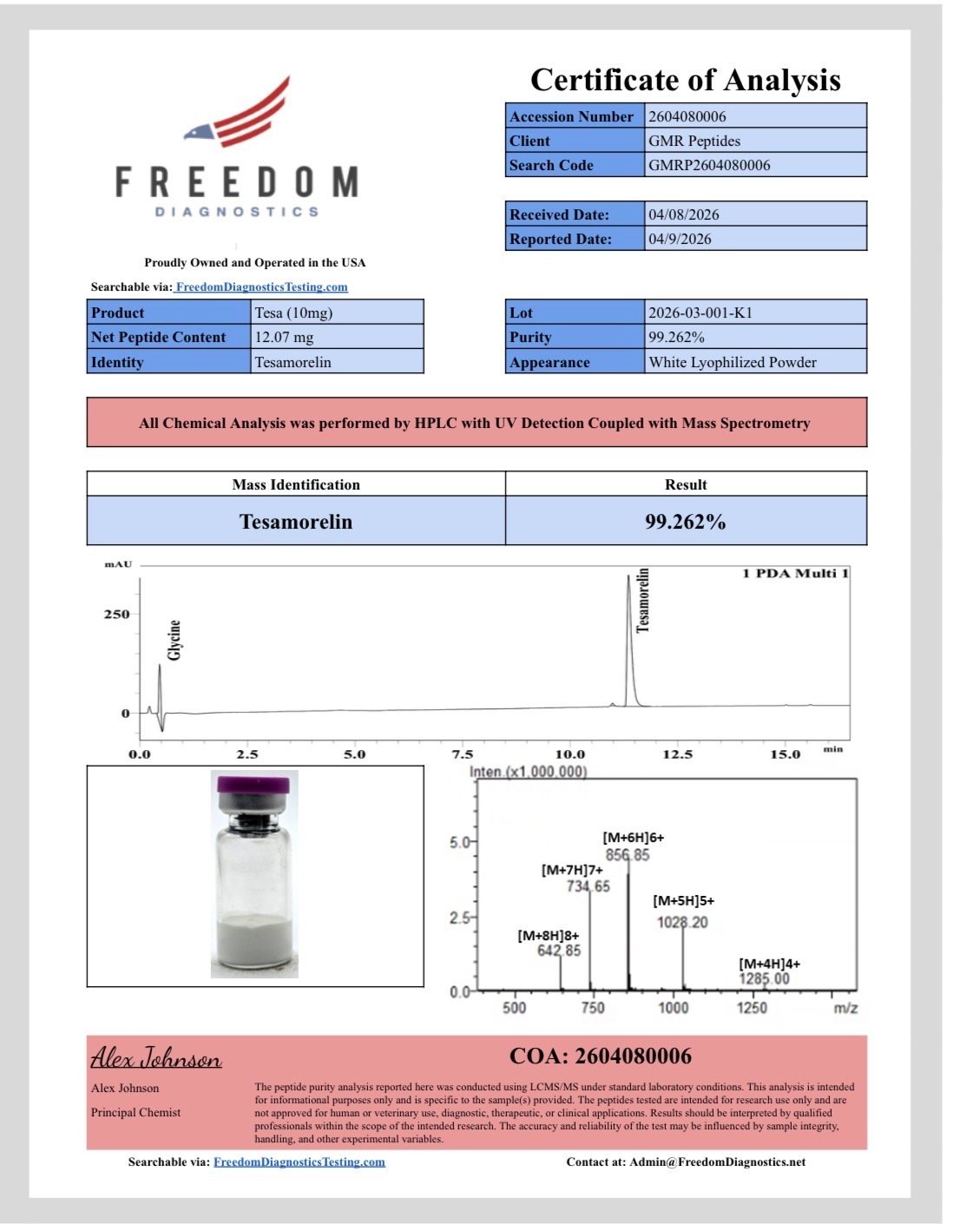
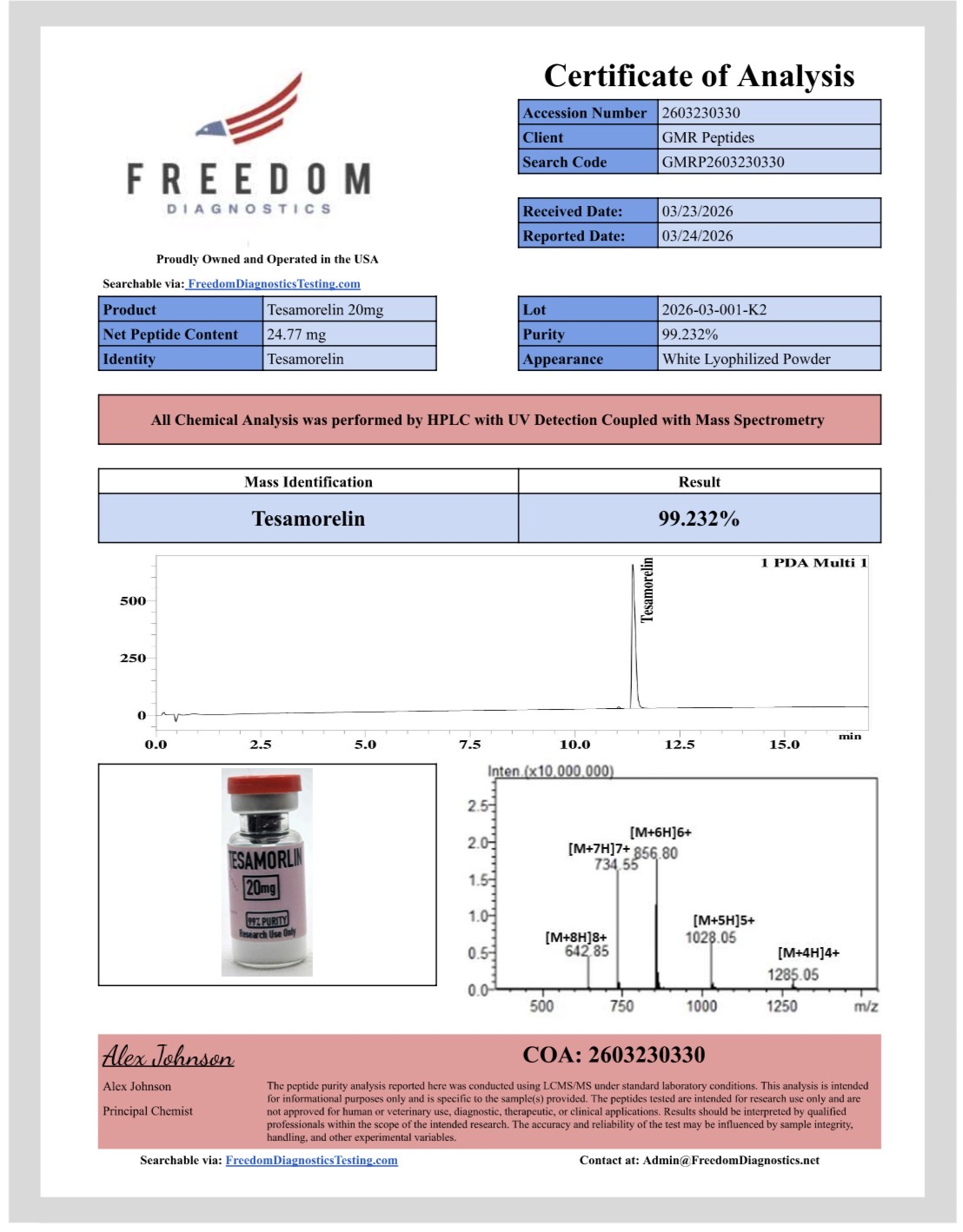
Each Tesamorlin lot should display third-party analytical documentation that supports peptide purity verification, lot traceability, and laboratory sourcing review. This section is where laboratories confirm labeled content, measured content, analytical method, test date, and release status.
Lot #2026-03-001-K2
Verified Purity
Lot #2026-03-001-K1
Verified Purity
As a synthetic GHRH analogue research peptide, it is studied for its binding affinity to GHRH receptors on pituitary somatotrophs, facilitating the evaluation of pulsatile signaling dynamics in laboratory models.
Experimental observations focus on its potential to influence hepatic IGF-1 production pathways, allowing for the monitoring of GH-axis marker shifts and IGF-1-linked response patterns in controlled settings.
Laboratory peptide signaling studies investigate the coordination between receptor engagement and lipid-handling endpoints, specifically looking at imaging-based imaging trends and endogenous metabolic pathway behavior.
Summarize literature-reported observations using neutral, research-supply language. Do not present this section as therapeutic proof, expected user outcomes, or treatment-effect advertising.
Reported observations within the cited experimental datasets
This section can remain as a multi-card observation summary, but the copy should reference experimental observations, biomarker behavior, and measurement endpoints rather than benefits or lifestyle outcomes
Published data describe laboratory observations across metabolic marker sets.
Observations in trunk muscle density and lean mass area within experimental models.
Literature-reported measurement endpoints in selected study populations.
Aggregate findings from documented research cohorts (n=816)
Detection of anti-tesamorelin antibodies in selected research subjects.
Any timeline shown on the page should be tied to the cited study interval and described as a source
specific observation window. Avoid consumer phrasing about when someone will see results.
Discontinuation language should refer to study retention or withdrawal reporting within a specific dataset. It
should not be written as personal-use guidance or interpreted outside the cited research context
No. Tesamorlin is described in the literature as a receptor pathway research peptide associated with
GHRH signaling, while HGH refers to growth hormone itself. Keep this distinction descriptive and limited to
signaling behavior and study context
No. The page should position Tesamorlin strictly as a research peptide for laboratory study. References to
imaging endpoints, body-composition measures, or hepatic metrics should remain literature summaries
within a research-only framework.
Researchers commonly review lot-specific COA documentation, peptide purity verification, measured
content, analytical method, and source-linked biomarker or imaging endpoints described in published
materials
Some publications have discussed exploratory assessment signals. When included on the page, these
references should remain clearly identified as experimental observations from cited literature, not promises
of functional improvement.
All clinical data and research findings cited on this page are sourced from peer-
reviewed journals and official publications.
This product is sold exclusively for in vitro research and educational purposes. It is not intended for human or veterinary use, and is not intended to diagnose, treat, cure, or prevent any medical condition or disease. All clinical trial data, research findings, and scientific information presented on this page are sourced from peer-reviewed academic publications. This content is provided for educational reference only and does not constitute medical advice, product claims, or treatment recommendations. By purchasing this product, the buyer confirms they are a qualified researcher and will use it strictly in accordance with all applicable federal, state, and local laws and regulations. GMR Peptides assumes no liability for any misuse of this product outside of a research context.
This website contains products for research use only. By entering, you confirm that you are 21 years of age or older.
Enter your email to unlock 20% off your first research supply order.
By clicking "I Agree", you acknowledge that all products are strictly for laboratory research purposes and are not for human consumption.